Review: Midnight Rising: John Brown and the Raid That Sparked the Civil War

Midnight Rising: John Brown and the Raid That Sparked the Civil War by Tony Horwitz first caught my attention when it was offered on the War Through The Generations blog as a prize, one of three books generously donated by Macmillan Audio.

Alas, I did not win a copy of the book, but I went searching for it at my library. And there it was, in all its audio book glory. I put myself on the waitlist and hoped my turn would come up before the end of the year.

My turn did come up. And I’m happy to say it was worth the wait.

From Amazon:

Plotted in secret, launched in the dark, John Brown’s raid on Harpers Ferry was a pivotal moment in U.S. history. But few Americans know the true story of the men and women who launched a desperate strike at the slaveholding South. Now, Midnight Rising portrays Brown’s uprising in vivid color, revealing a country on the brink of explosive conflict.

Brown, the descendant of New England Puritans, saw slavery as a sin against America’s founding principles. Unlike most abolitionists, he was willing to take up arms, and in 1859 he prepared for battle at a hideout in Maryland, joined by his teenage daughter, three of his sons, and a guerrilla band that included former slaves and a dashing spy.

On October 17, the raiders seized Harpers Ferry, stunning the nation and prompting a counterattack led by Robert E. Lee. After Brown’s capture, his defiant eloquence galvanized the North and appalled the South, which considered Brown a terrorist. The raid also helped elect Abraham Lincoln, who later began to fulfill Brown’s dream with the Emancipation Proclamation, a measure he called “a John Brown raid, on a gigantic scale.”

Tony Horwitz’s riveting book travels antebellum America to deliver both a taut historical drama and a telling portrait of a nation divided—a time that still resonates in ours.

The book covers John Brown’s life and provides enough information on those around him (of both personal and historic importance) that I came away with a better understanding of this single-minded man and the time in which he lived.

While I enjoyed the entire book, the section that covers the raid and the summer build-up to it were especially interesting. I was particularly taken by Annie Brown and the summer she spent in the company of her father and his men at the Kennedy farm in Maryland (not far from Harpers Ferry).

Annie and her sister-in-law Mary (wife of John’s son Oliver) spent the summer at the Kennedy farm as camouflage, to help make it look like a real working farm–because a group of men doing nothing but moving and hiding large crates looks suspicious.

I really enjoyed the camaraderie as described by the author between Annie and the men at Kennedy farm. There are hints (or at least, the author speculates) that among those killed at Harpers Ferry was a young man Annie had fallen in love with. (And there’s a novel in there, I’m sure. It ends tragically, of course.)

The above illustrates what I enjoyed about the book. The narrative is rich with historical detail, while at the same time, makes for compelling reading.

In all, Midnight Rising: John Brown and the Raid That Sparked the Civil War by Tony Horwitz is a detailed and fascinating look at a very important event in US history. I highly recommend it.
Booking Through Thursday: Reading resolutions

From Booking Through Thursday this week:

Any New Year’s reading resolutions?

I would like to up my reading again this year. I read 60 books last year (this includes audio books). This year, I want to read one print/e-book per week, for 52 books, plus whatever I listen to in the car during the commute.

Rough goal: 75 books this year. Can I do it? We’ll see.

I’m going to participate in a reading challenge this year. I didn’t last year and I missed that. War Through the Generations is doing a Civil War reading challenge. And hey, I’m one book in already. My goal is three to five, but I hope to read more than that.

What I plan to read:

  • Two Girls of Gettysburg (halfway done and I’m enjoying it)
  • Louisa May Alcott’s Civil War (All her Civil War writings in one volume—I’m on a LMA kick)

Possible Re-reads:

  • Little Women (see above re: LMA)
  • The Killer Angels by Michael Shaara (read, more than once, back in the day as officer professional development)

How about you? Any reading plans? A challenge or two? Tackling the TBR pile?

War through the Generations WWII reading challenge: Complete!

 wwiiWar Through the Generations Reading Challenge

My goal was to read five WWII books and I read … five WWII books. I know. I’m astounded as well.

In all seriousness, I really enjoyed this challenge; it was my first reading challenge in general and I picked a great one to get started on what I suspect might become an addiction. Watching all the reviews come in on War Through The Generations added to my TBR pile. Keeping up with all that must have been a challenge on the part of the blog owner and I appreciated it.

On to the books!

Past and Present:

Two books I read fall into the “past influences the present” category.

Tamar: A Novel of Espionage, Passion, and Betrayal by Mal Peet

I have a longer review here, but I really enjoyed how Mal Peet wove this tale of past betrayals and damage from the war into a present-day coming of age story. It’s an important reminder that war doesn’t just end.


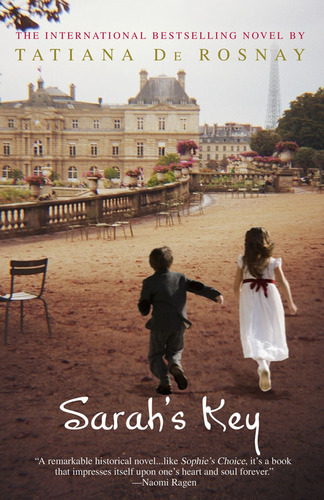
Sarah’s Key by Tatiana de Rosnay

While I enjoyed this book, of the five, it was my least favorite. There were parts I really liked. The history was riveting. I knew a bit about the 1942 Paris roundups and deportations, but not a whole lot, and not about the Vél’ d’Hiv’ in particular.

Like other reviewers, I found the modern-day portion of the story not quite as satisfying. Or rather, there were parts I thought added to the story and parts that left me less interested. When the story focused on Julia’s quest to find out how her in-laws were connected to the Sarah of the title and the repercussions of that, I felt the modern portion really hit its stride. I especially liked the growing understanding between Julia and her previously remote father-in-law despite her crumbling marriage to his son.

The ending, to me, felt removed, divorced from the story, although I don’t think the author meant it to be. I recommend this one with reservations.

Can you keep a secret:

Normally the setup where the protagonist is “living a lie” is one that is a challenge for me. It’s probably why I don’t like a lot of romantic comedies. I find the motivation for the lie silly or unnecessary. Wouldn’t it be easier to tell the truth? Yeah, I know, that would mean a fifteen minute movie, which wouldn’t exactly work.

When done well (as with the two books below), I’m So. Freaking. Tense. I can barely stand it.

Flygirl by Sherri L. Smith

I loved this book. I loved it so much, I nominated it for this year’s Cybils Awards. Not only is it an entertaining read, it packs in an incredible amount of information, not only about the WASP program, but life in the south and the military for African Americans during the 1940s. It would make an excellent book for a middle grade/high school classroom.

I adored Ida Mae. While Sherri Smith builds an excellent case for her to pass as white and join the WASP program (the only way she can join is to pass for white), as a former Army vet, she didn’t really need to convince me. Go Ida Mae!

I found myself grinning during the training scenes, and at the reactions of the civilian women to the flygirls (all women associated with the military must be “loose,” don’t you know). Some things simply don’t change.

All in all, an excellent read. I highly recommend it.

Ten Cents a Dance by Christine Fletcher

In this novel, Ruby, both tough and naïve, faces the challenge of providing for her family when her mother can no longer work due to rheumatoid arthritis. Choices are limited for a sixteen-year-old Polish-American girl in 1941. She’s tempted away from her job in the meatpacking plant (wonderfully and nastily described–I don’t blame Ruby) by the local bad boy heart throb.

She finds herself working as a taxi dancer, keeping five cents for every ten-cent dance, although she tells her mother she has found work as a night-shift telephone operator. Ruby gradually learns to “fish,” and gets a lot more than five cents for her efforts.

This is a downward spiral story, and it’s a hard fall for Ruby. Even so, Christine Fletcher had me cheering Ruby’s small victories, even the ones I knew would come back to bite her in the rear end.

It’s also a fairly gritty look at an era we tend to romanticize: organized crime, blatant racism, limited opportunity. It’s all there.

In the end, tough little Ruby saves herself. It might not be a rose petal happily ever after, but I found the end of her story totally satisfying.

I recommend this one, especially for writers. Not only is there the overall story arc to provide tension (oh, ow, ow, yes, it killed me), but Christine Fletcher has mastered the art of what Donald Maass calls micro-tension–that tension on every page that keeps people reading.

Squee-filled fan-girly love:

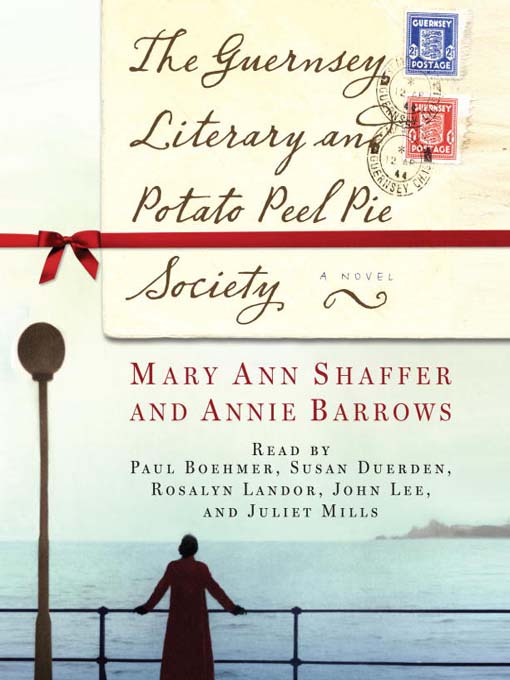
The Guernsey Literary and Potato Peel Pie Society by Mary Ann Shaffer and Annie Barrows

This is a novel told in epistolary form, a series of letters between author Juliet Ashton, her publisher, and the inhabitants the channel island of Guernsey.

I knew next to nothing about the German occupation of Guernsey, and in that respect, this novel illuminates a great deal about that. But beyond that, it’s a bibliophile’s book, it’s a charming book, and I’m not going to attempt any type of review because I have massive fan-girly love for it.

Seriously, if I had to pick a favorite book read for 2009, it’s this one. Additionally, the audio book is doubly excellent, the actors for the various characters pitch-perfect.

Highly recommended, if you haven’t already guessed.