Garden wrap-up

I’ve been feeling a bit deflated about the garden this year. Between the long stretches of rain, heat domes, and the air quality, I wasn’t outside working as much as I wanted to be.

Even so? I did plant my cottage garden this year. And it was mostly successful! It’s a bit bedraggled now, thanks to a recent hailstorm, but look at this last lovely gift:

The pretty purple and yellow asters in the cottage garden.

The asters I planted came in strong. Also? They are apparently Vikings fans. (We almost always almost win.)

Another thing I’ve noticed this year is the increase in pollinators and beneficial bugs in the yard. Actual ladybugs! Butterflies, including Monarchs (which I haven’t seen for a couple of years), and, of course, many, many of our native bees.

It’s still so mild that yesterday, my daughter and I took a tour of the yard and—with the pollinators in mind—did some planning for next year. There are some excellent spots near the pond where invasive weeds are growing. We’re going to put down some cardboard and tarp now, so in the spring, we can plant a variety of native wildflowers—and add some milkweed to the mix for those Monarchs.

Our city offers a comprehensive Planting for Pollinators program, which allows you to purchase native seeds by growing area (e.g., dry/wet, partial shade/full sun). And who knows, we might tackle the buckthorn while we’re at it.

So while not everything turned out (my wall of morning glories for the hummingbirds never materialized), all in all, it was a good year for gardening.
Seven months in: another reality check

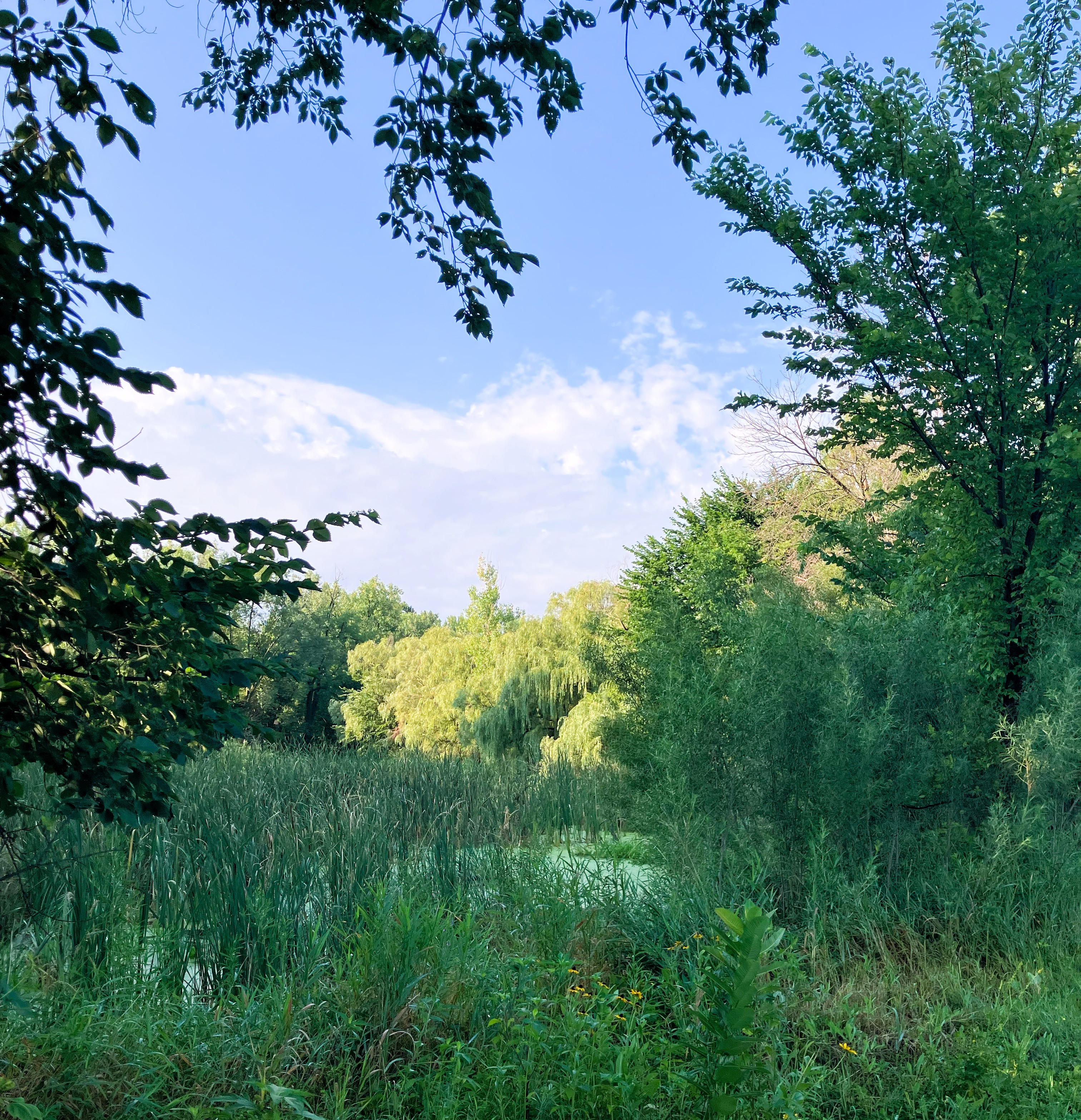
A view from my thinking-walk route

January 3rd of this year was my last day of work. After my final check-in with my manager, she told me to go ahead and log off at noon. So I did, and had my work laptop boxed and at FedEx in less than thirty minutes.

Note: It helped that the closest FedEx Office is about two miles away.

I figured that August 3rd is a good day to do another reality check. So, how’s it going?

In retrospect, pretty good.

  • I completed two paper edits of The Pansy Paradox and one of the bonus novella, The Capstone Conundrum. Yes, I love me some alliteration.
  • I’ve sent both books to my proofreader.
  • I regularly have coffee dates with a friend from my former workplace who is also a writer. This has been wonderful.
  • I attended the Author Platform Growth Summit, which focused on mindset, resiliency, sustainability, and alignment in an author career, rather than tactics, toxic productivity, and the hustle and grind.
  • I finally bought my Mac Studio and have dived headfirst into Photoshop.
  • I completed a read-through of The Marigold Miracle, and now I’m musing and bread-machining my way to a second draft.
  • I planted my cottage garden.
  • I’ve been taking lots of long (thinking) walks.

One thing that really stands out: None of the above feels like work. That doesn’t mean it’s without effort, or that I don’t get tired, or overwhelmed by information.

What doesn’t exist anymore in my day-to-day working life is this:

No context switching (h/t Cal Newport). The first thing I do with technology in the day is either write or use Photoshop. No email and no social media. I may have a browser open to a stock image site or Adobe fonts, or whatever. But that’s it.

No hyper-active hive mind and no pseudo productivity (h/t also Cal Newport). I do not miss Microsoft Teams or VPs/senior directors sliding into Teams chat on the regular. I really don’t miss unending email threads where someone copies me on a discussion because it “might” be a documentation issue. (And to be clear, everyone involved would love to make it a documentation issue—well, except documentation.)

So work? Doesn’t feel like work. I do want to stress that I still get tired, still need weekends to give my brain a break. But I don’t get the Sunday scaries. In fact, I really love Monday mornings.

And I couldn’t be more grateful.

Garden this and that

I spent the early hours of the day in the garden, before the heat became unbearable. I ended up soaked in sweat anyway, but it’s the first time I’ve had a chance to do some gardening.

Sadly, my cauliflower and broccoli are no more, thanks to one of the most destructive creatures on earth: tiny baby bunnies. They ate all the leaves and that was that. (And yes, I have the vegetable garden fenced, but baby bunnies are insidious.)

The cucumbers, though, are just fine.

The wall of morning glories I planted for the hummingbirds did not materialize. However, there are plenty of other flowers. Between those and the feeder, the hummingbirds don’t seem to mind the lack of morning glories.

My phlox is blooming despite the fact that deer came through and chomped the tops off a few weeks ago.

My hydrangeas are blooming—I just leave them alone. So far, so good.

It’s pollinator central in the yard—all kinds of bees and other pollinators, and more butterflies this year than I’ve seen in a long time. Despite everything being kind of a mess, I feel like I must be doing something right.

So, my less-than-pristine garden continues to grow. I think there’s a (somewhat obvious) metaphor for writing in all this. It’s messy, unpredictable, doesn’t always turn out the way you expect it to, but it’s always worth it.  

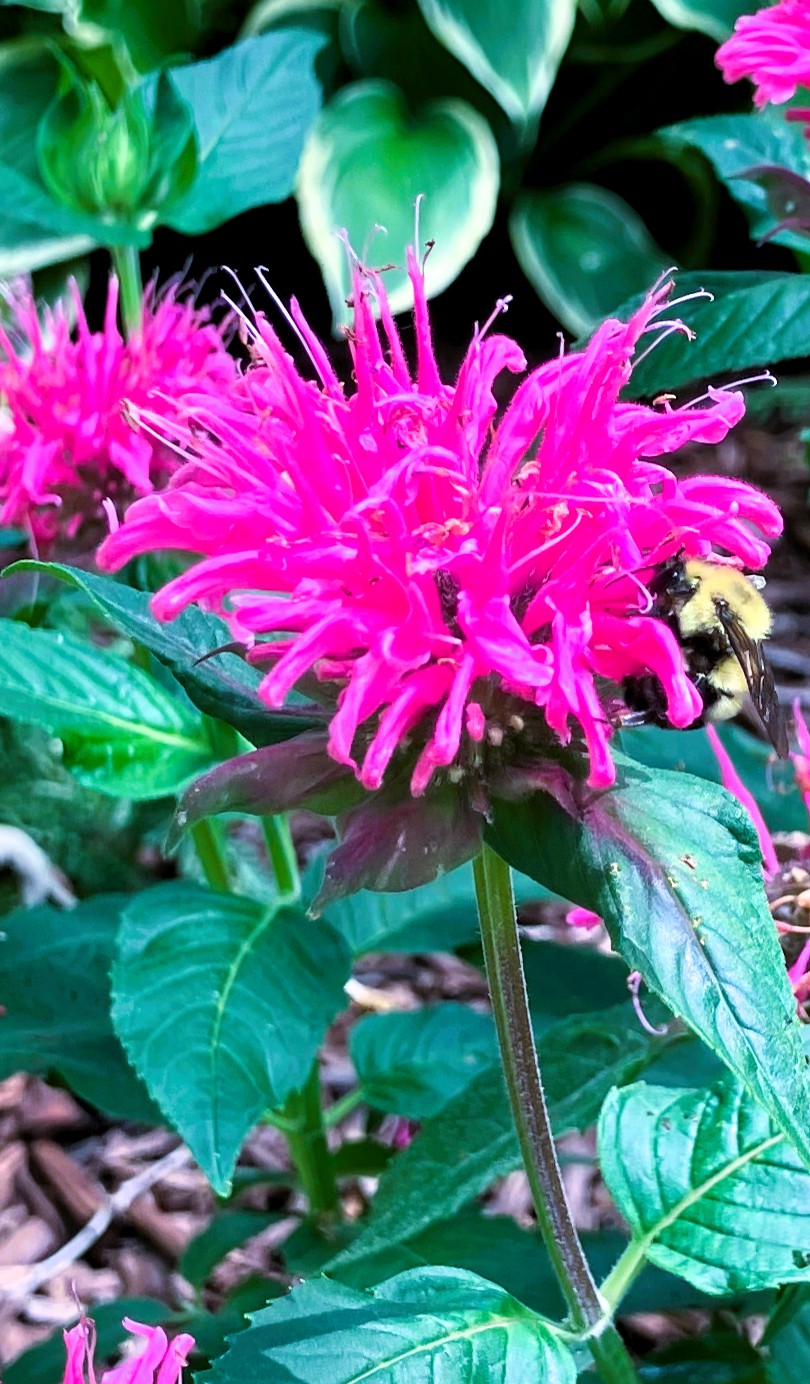
The aptly-named bee balm, with mandatory bumble bee

Cottage Garden aspirations

Photo essay incoming.

So last year, I wanted to do something about this:

How it started

Once upon a time, this space was filled with hostas and day lilies. It wasn’t inspiring landscaping, but it worked. Over the years, it became a catch-all for a wide range of things. You can see the indent from the free-standing basketball hoop. But this space is where things got tossed—roofing debris, decking, and so on.

Then, of course, weeds and saplings began to take over. Although the hostas are fighting the good fight.

Clearing all that out was as far as I got last year. Mainly because I wasn’t sure what to do with the space.

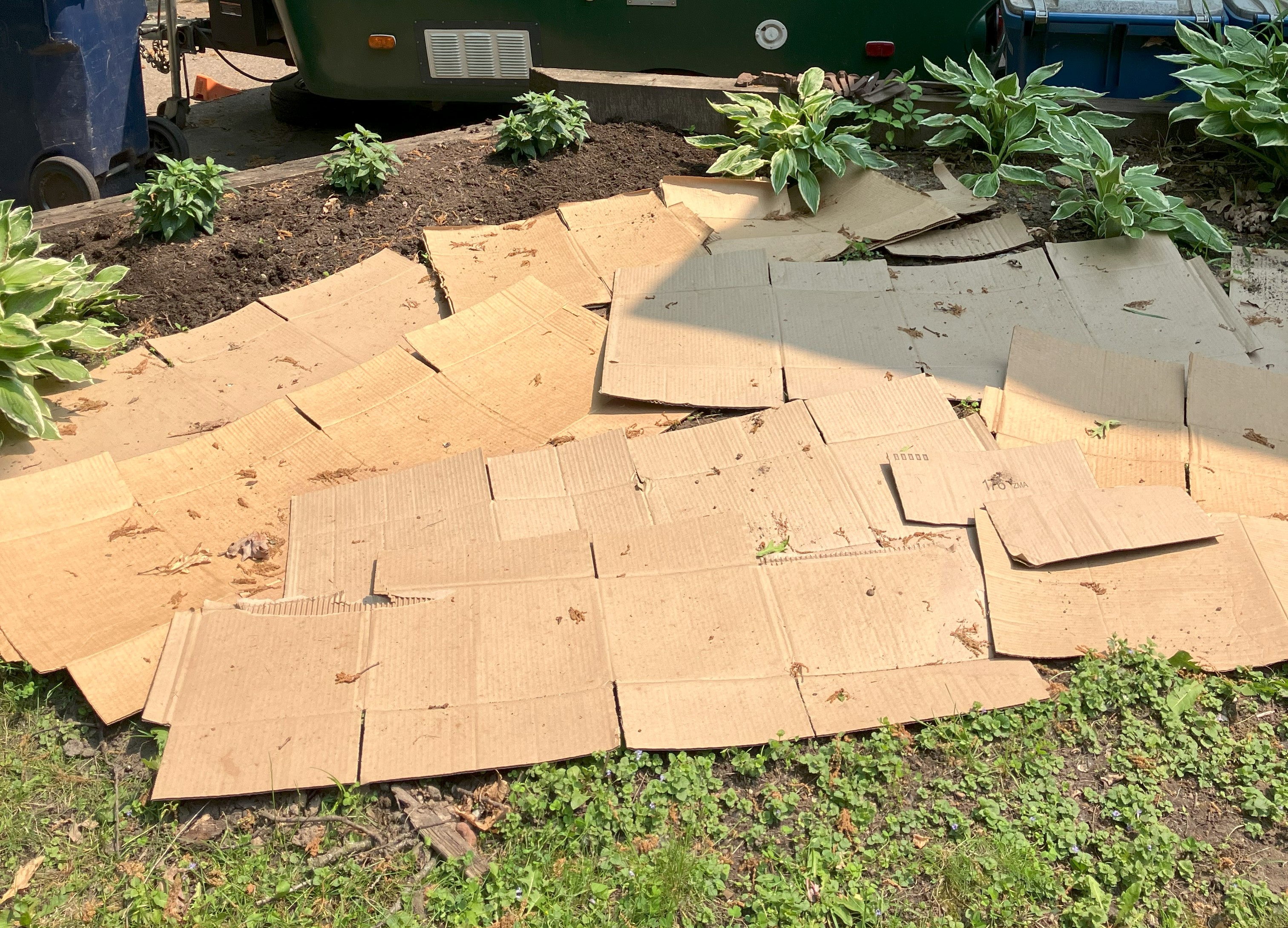
This year, I had the inspiration of starting a pollinator/cottage garden. Because the weeds and saplings were so aggressive, I opted for the cardboard mulch method:

Cardboard Mulch phase
Planning the plant arrangement
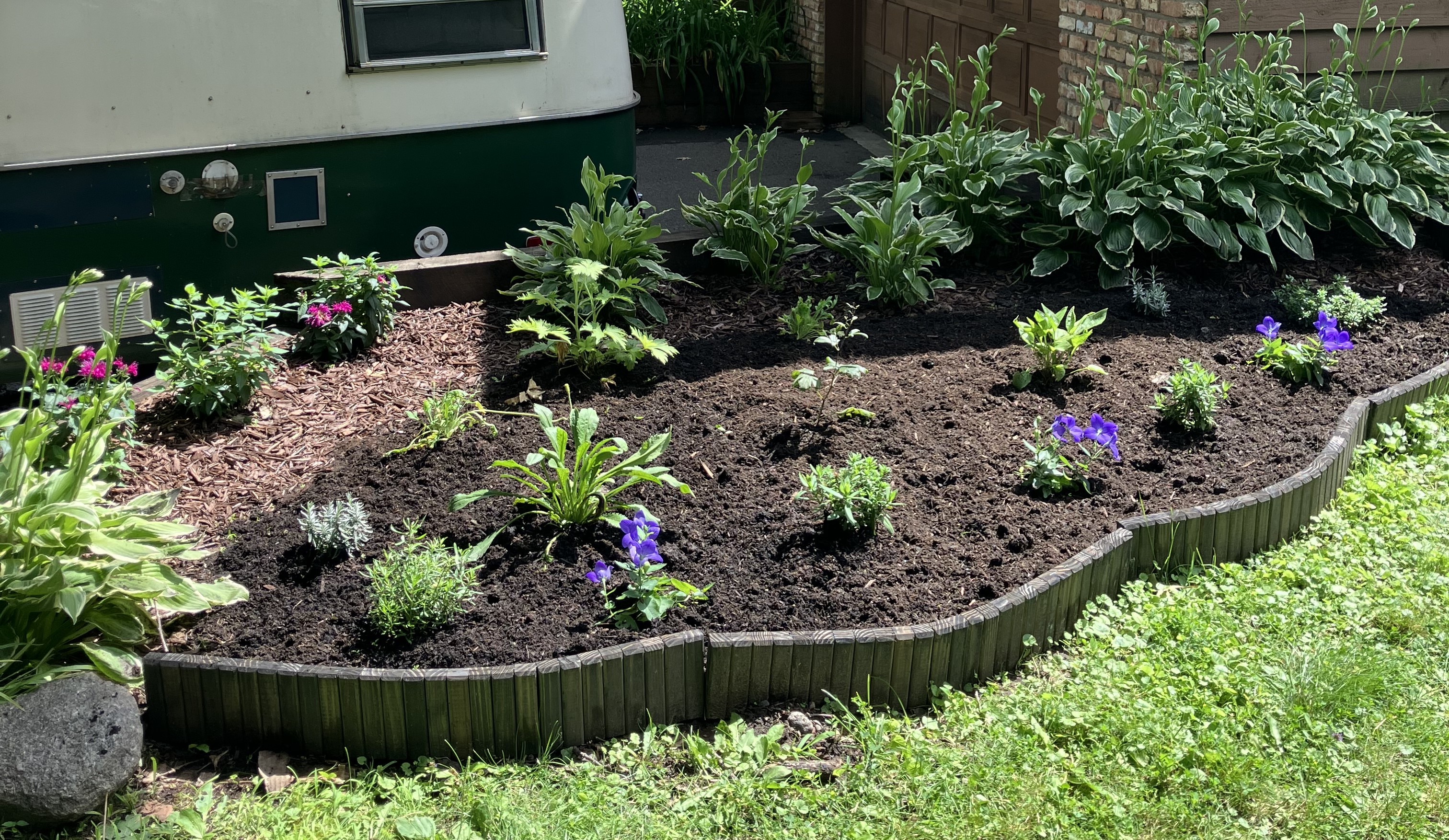
Cottage garden planted (June)
Cottage Garden July

The hostas seem to be making a comeback. That’s bee balm between the two patches of hostas. We have a nice mix of pollinator-friendly flowers: daisies, asters, poppies, delphinium, echinacea, and lavender. They seemed to have survived the downpours and the heat dome fairly well.

The trick with the cardboard mulch method (or so I’ve read) is that you need to continue to add compost during the growing season. This is what I did yesterday, and honestly, I think the plants are happier already.

And now, since it’s been a week, it isn’t raining, it isn’t too hot outside, I’m heading back into the garden to touch some grass (and other growing things).

When life gives you broccoli

This is what it looks like when life gives you broccoli.

Broccoli and cat friends

Trust me, that’s a lot of broccoli.

I didn’t realize before I planted it this spring that broccoli can be a little fussy. It’s prone to bolting. (This always has me imagining the broccoli dashing through the yard—with me and the rabbits chasing behind.)

But! I somehow managed to get this crop and plenty of side shoots as well. We also planted bell peppers and fairy tale eggplant, which are coming in nicely and are very tasty.

Fairy tale eggplant, green bell peppers, and broccoli shoots

But back to that broccoli. I thought, why not make one of those salads Anno recommended on her blog a while back. I picked the one from Smitten Kitchen. However, after adding that ½ cup of dried cranberries, I immediately doubled it. (Why anyone thinks ½ cup of dried cranberries is enough is beyond me.)

But first, I had to chop, chop, chop the broccoli. Then, somehow, I had to keep on chop, chop, chopping the broccoli. It. Was. Endless. I felt like Emma from my story Flowers and Stones—I had an industrial-sized amount of florets by the time I was done.

And broccoli salad for a solid week.

I also planted kale, not that we’ve eaten any of it. The rabbits have also declined to eat it, as have the deer. Still, it continues to grow to spite us all.

In non-vegetable news:

I have ~65,000 words in my current manuscript. I think that’s halfway, more or less. Yes, it’s going to be a bigger book and possibly a series (or at least two books). I’m writing from the point of view of three different characters in this story. I’m doing it in present tense, first person POV; present tense, third person POV; and past tense, third person POV. I don’t necessarily recommend writing a story this way. Still, it’s how this particular story wants to be told.

In even more non-vegetable news:

I’m going to see Ann Patchett! She’s coming to town for Talking Volumes, an author series our local public radio station sponsors. I didn’t even know she was coming to town. One day in June, I wondered whether Talking Volumes had anyone interesting scheduled for the fall. So I decided to do a quick check.

Ahem. Anyone interesting, indeed.

The tickets for Ann Patchett had just gone on sale, were selling fast, and somehow, I snagged the last lone seat in the main orchestra section, row M, right in the center. It was like it was there, waiting for me.

I can’t wait. I just finished Tom Lake, I’m rereading Bel Canto, and I think I’ll move on to The Dutch House next. I even bought a new dress.

Although, I can’t help but wonder if Ann might like some broccoli. Because I could bring her some.

I have plenty.

Because everybody loves a makeover

OR what I’ve been doing other than blogging.

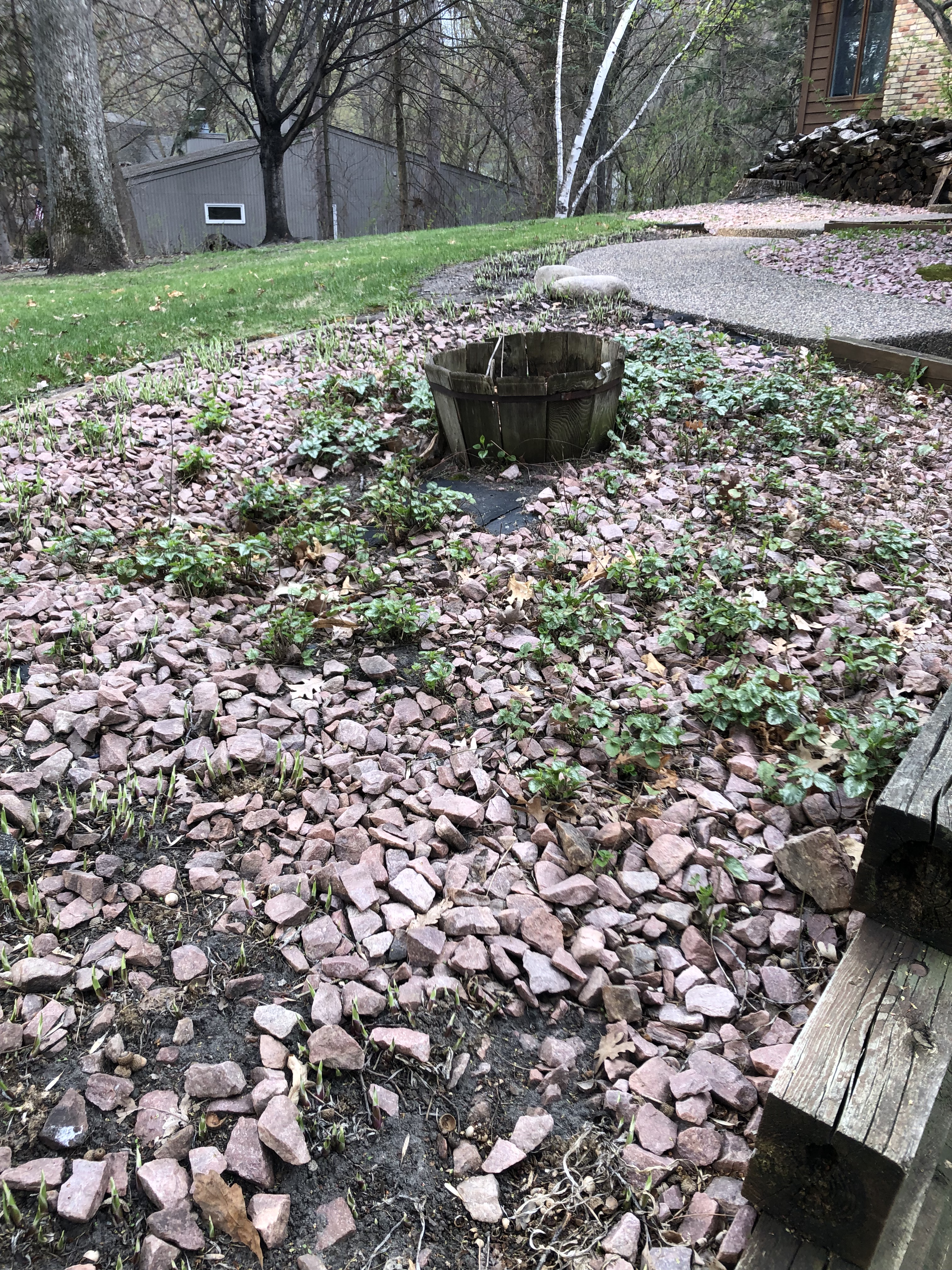
Before:

If you’re thinking to yourself, wow, that’s a lot of pink landscaping rock, well, you’d be right. It’s pink landscaping rock my daughter and I decided to remove by hand.

I’ll pause while you laugh.

Also, if you’re thinking pink rocks are the glitter of the landscaping world (we’re never getting rid of all of them), you’d be right as well.

I suppose the pink combined with the green hostas was a design aesthetic for a hot minute sometime in 1988. Mind you, the design and the rocks came with the house.

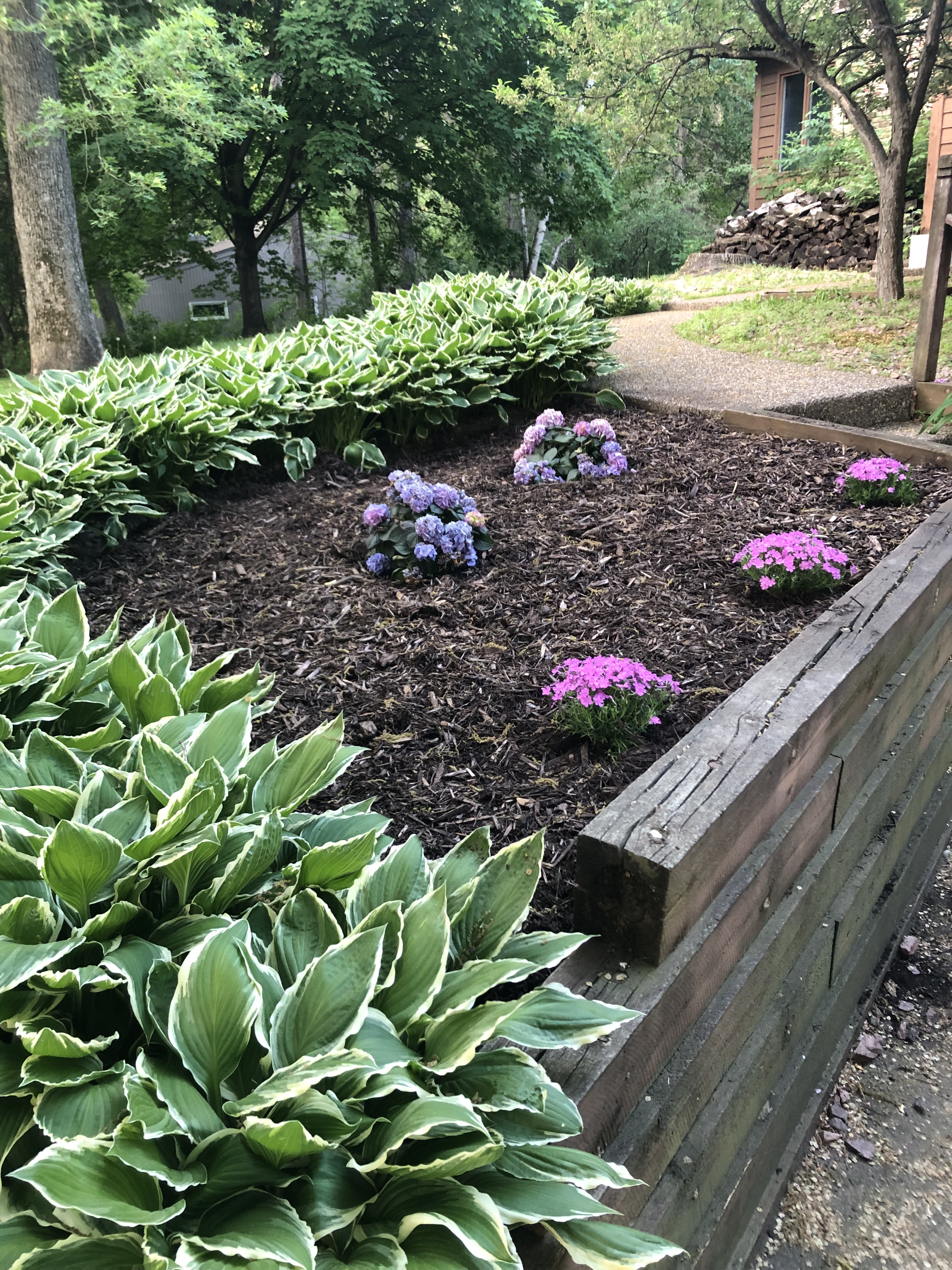
After:

I mean, clearly, we have nothing against pink. And sure, we could divide those hostas. They’re like super-hostas. They’ve been going strong for years decades without any intervention. At this point, I’m a little superstitious about doing anything with them.

Honestly, I think they’ll just continue to grow, become sentient, and take over the world. And really, we might all be better for it.

Timelapse of the project