Write 1/Sub 1 check in: the one some Girl Scout cookies

W1S1 2014 - Monthly ChallengeSo …  the back of my car? Filled–filled I tell you–with Girl Scout cookies. I don’t suppose anyone would like to buy a box or ten. My weather widget says it’s zero degrees right now. Once it gets “warm” enough, we’re going to layer up and hit the streets. 

I started something new this week, something that is (clearly) not a short story, since it already has 5,000 words. I suspect it will go long, and I’m looking to write a flash sometime this month so I can have an official “write 1” for February. Ah, but the month is still young (of course, it’s short, so I don’t want to put it off for too long).

I’m beginning to think that if last year was the year I wrote short, this is the one where I go long. I guess we’ll see.

Writing Work:

  • The Time After ~ 5,000 words

Submissions:

  • Abandonment Issues
  • The Burden of So Many Roses (audio market) 

Rejections:

  • Abandonment Issues

Acceptances:

  • None

Publications:

  • None

Write 1/Sub 1 check in: wave goodbye to January (if not winter)

W1S1 2014 - Monthly ChallengeSo … I ended up with a novelette that wants to be a novella when it grows up. Once I told myself “screw the word count” I started writing faster and finished the story on Tuesday this week. I’m not sure what to do with it, other than let it “compost” for a bit and then take a second look. It’s really too long for most markets (especially since it’s YA) and too  short for a novel. 

That left me plenty of time for shaping up some new stories to send out. So, this week alone, I sent out four stories, three of them fresh submissions and one a re-submission.

I’m also still working on learning InDesign, which I continue to love. It’s so pretty. Sometimes I open the program just to stare at the interface. You have to understand, I normally work with XML authoring tools, where the interface manages to be both ugly and difficult to use. InDesign leaves me just a little be breathless.

All in all, this hasn’t been a bad start to 2014.

Writing Work:

  • Lawn Mower Serenade ~ 9,000 words

Submissions:

  • Like Bread Loves Salt
  • Abandonment Issues
  • Where Were You When the War Started
  • The Madness in King’s End

Rejections:

  • The Madness in King’s End

Acceptances:

  • None

Publications:

  • None

Write 1/Sub 1 check in: the one with a long winter

W1S1 2014 - Monthly ChallengeSo … I wrote a lot this week (but I’m not sure how much, I haven’t counted the words yet) and I’m this close to finishing my story. I still think I might not be writing as much as I could be. But then, I always think that. I could write an entire novel in a single week, and still think that. So. Yeah. 

I did do some revising work on another story and I hope to send that out in a day or two. 

I also spent a lot of time working through InDesign tutorials. I really love this program and I’m enjoying myself so much, but there’s a lot to learn as well.

In other news, I think we’re all officially sick of winter. You know things are bad when the kids are upset about missing school.

Writing Work:

  • Lawn Mower Serenade ~ still in progress

Submissions:

  • The Girl with the Piccolo (audio market)
  • The Life Expectancy of Fireflies

Rejections:

  • The Girl with the Piccolo

Acceptances:

  • None

Publications:

  • None

Ten day challenge day 4: writing books

10 Day Write Blog Challenge button200So for yesterday’s Ten Day Writing Blogger Challenge I decided to take the day off, since I didn’t take a day off on Sunday. Make sense? Well, it worked for me. My daughter was sick (germy camp is germy) and I wasn’t feeling all that great either.

So she spent the day reading in the living room fort she constructed and I sat in a nearby chair and did much the same (reading, not fort construction). In the evening we watched an episode of Doctor Who. As sick days go, it wasn’t too bad.

But I’m back at it today with books on writing.

Today’s prompt:

Profile 3 to 5 top writing craft books.

I’ve picked the three below because they each changed something about the way I write. In video game terms, I felt I leveled up after working through each book. That being said, I think the key word in that sentence is work. I’ve read a metric ton of writing craft books (no, really, I bet if you stacked them all on a scale, they would weigh a metric ton), but some I just skimmed, some I got halfway through, others I did read and maybe did some of the exercises, but I wasn’t militant about it.

The three below? I threw myself into the process. My mindset was: I am going to do this thing, no matter the outcome. It’s very much how I’m approaching Write 1/Sub 1 this year.

Anyway, my three books are:

Writing the Breakout Novel Workbook

Interestingly enough, the outcome of this was the spine for The Geek Girl’s Guide to Cheerleading.

The Anatomy of Story: 22 Steps to Becoming a Master Storyteller

The jury is still out on this one, at least where the product piece of it is concerned (we’ll see, we’ll see–and that’s all I’m saying about that). I used it to write/revise Speechless. I will say this particular craft book is not for everyone. It’s dense and intense and a completely different way of looking at building a story. Still, I got a lot out of it.

Around the Writer’s Block: Using Brain Science to Solve Writer’s Resistance

This is less a how-to book and more of a how-to-get-writing book. Some days all it takes for me to start my writing session is to acknowledge that I’m feeling that tug of resistance. The author, Rosanne Bane, has a terrific website, The Bane of Your Resistance, if you want to try before you buy. I recommend both the book and the website.

One way to capture those fifteen magic minutes

In late November of last year, I was searching for a way back into my writing. I was searching for a way to do what Ray Bradbury urged here:

“I don’t believe in optimism. I believe in optimal behavior. That’s a different thing … Action is hope. At the end of each day, when you’ve done your work, you lie there and think, Well, I’ll be damned, I did this today.

It doesn’t matter how good it is, or how bad – you did it. At the end of the week you’ll have a certain amount of accumulation. At the end of a year, you look back and say, I’ll be damned, it’s been a good year.” ~ Ray Bradbury

Terrific and inspirational advice but how, how, do you get there? How do you turn your hope into action? One way is to create a writing habit (which works an awful lot like an exercise habit–in fact, exercise has a lot in common with writing, but that’s fodder for another post).

Take a quick look at Rosanne Bane’s post on Why Habits Work When Discipline and Will Power Won’t and you can also read her post here about those fifteen magic minutes. To everyone who says you can’t create something worthwhile by writing for fifteen minutes three to five times per week, I say:

You can’t create anything worthwhile if you never start.

So go. Start something. What that something is matters less than you think it does.

So anyway, back in late November, when I was trying to figure out a way to start, I stumbled upon The Southeast Review’s 30-Day Writer’s Regimen. They were gearing up to run a version during December. I nearly didn’t do it. Come on, December? The holidays? How on earth was I going to write? Then I decided it would be a Christmas gift to myself.

It was very low stress. All I needed to do for each prompt they sent was write a single page, longhand (that’s maybe 250 words for me). It didn’t even need to be about the prompt, just whatever came to mind after reading it.

I missed a day or two (but oddly, not Christmas itself). One prompt inspired exactly nothing, so I wrote about my reaction to that prompt (wow, I have a whole lotta nothing for this one …). Some prompts got a page. Some built a continuing story, one became a poem, another a flash fiction piece. And one was the jumping off point for my very first Write 1/Sub 1 for the year, which ended up at ~8,000 words.

All because I decided I could write a single, longhand page per day for thirty days. By doing so, I built a habit, one I happen to love.

And … they’ll be running the Writer’s Regimen again in June. All new material. Still plenty of time to sign up. Anyone want to join me?

Put it away (or how Angry Birds can help your writing)

So, I found this article via Wired the other day:

How Do We Identify Good Ideas?

And it has so many amazing things that apply to writing (and really, any creative endeavor) that I wanted to highlighted here (in case you missed it).

Here’s the gist:

A new study led by Simone Ritter of the Radboud University in the Netherlands sheds some light on this mystery. In the first experiment, 112 university students were given two minutes to come up with creative ideas that might alleviate a mundane problem: improving the experience of waiting in line at a cash register. The subjects were then divided into two groups: Half of them went straight to work, while the others were first instructed to perform an unrelated task for two minutes. (They played a silly little videogame.) The purpose of this delay was to give the unconscious a chance to percolate, to let that subterranean supercomputer invent new concepts for the supermarket queue.

The outcome? Those who’d been distracted were twice as good at picking out their truly innovative ideas.

The article also quotes Zadie Smith. And the quote is so full of all kinds of wonderful, I need to share it here as well:

When you finish your novel, if money is not a desperate priority, if you do not need to sell it at once or be published that very second — put it in a drawer. For as long as you can manage. A year or more is ideal — but even three months will do…. You need a certain head on your shoulders to edit a novel, and it’s not the head of a writer in the thick of it, nor the head of a professional editor who’s read it in twelve different versions.

This is my go-to writing advice. What do you do with a finished draft? Put it away. No, really. Do not look at it. Do not think about it. Mind you, hardly anyone ever follows this advice. In fact, it took me years to follow it myself. Now? It’s like my religion.

My drafting process goes a little something like this:

  • Workup/draft like crazy until I reach the end of the draft (this is important–get to the end)
  • Put it away for 4 – 6 weeks, at least
  • Do another draft.
  • Continue the process until it’s ready for someone else to read.

Sometimes I take something out too soon. How do I know this? Because it literally hurts my eyes and ears to read it. I loathe every. single. word. If I’m feeling the hate, I put it away until … well, I don’t feel the hate.

What to do in the meantime? Well, you could:

  • Write another novel (no, really, I’m serious about this)
  • Write a short story
  • Write an article for a trade magazine
  • Blog
  • Take a class in some form of writing you’ve never tried
  • Read

The list is endless. You don’t have to stop writing. The goal is to stop picking at your novel like it’s a scab on your knee.

Teaser Tuesday: Second Sight

Teaser Tuesday and the rules are simple:

Teaser Tuesdays is a weekly bookish meme, hosted by MizB of Should Be Reading. Anyone can play along! Just do the following:

  • Grab your current read
  • Open to a random page
  • Share two (2) “teaser” sentences from somewhere on that page
  • BE CAREFUL NOT TO INCLUDE SPOILERS! (make sure that what you share doesn’t give too much away! You don’t want to ruin the book for others!)
  • Share the title & author, too, so that other TT participants can add the book to their TBR Lists if they like your teasers!

Let’s try a writing book this week, shall we?

It’s as Richard Peck says: “A good YA novel ends not with happily ever after, but at a new beginning, with the sense of a lot of life yet to be lived.”

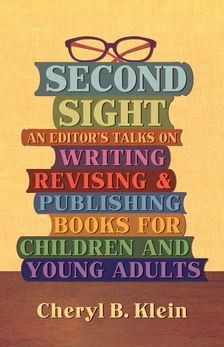
From Second Sight: An Editor’s Talks on Writing, Revising, and Publishing Books for Children and Young Adults, by Cheryl B. Klein, pages 217 – 218.

Oh, I love that. It gets it just right, I think. When we did our blog tour for Geek Girl, Darcy and I would often refer to the “hopefully ever after.” But I think this is better.

And it’s not really a spoiler, since Second Sight is a book of essays, so you don’t need to read in order if you don’t want to. Cheryl also has a lot of excellent information online for YA and children’s writers. Check out her blog and her website.

Getting schooled: a writer prepares (for the worst)

Despite all his talk about writing from the unconscious, Butler believes a writer should prepare before sitting down to write a novel.

So, does he want you to outline?

Nooooooo.

Brainstorm, do character sheets?

Nooooooo.

Plot boards, Excel spreadsheets, synopses?

Nooooooo.

He wants you to dreamstorm your novel. Yes. You’ve heard it here first. (Well, unless you’ve read Butler’s book, in which case, you heard it there first.)

It goes something like this:

  • Dreamstorm a scene from something sensual, by making a list of words, having some sort of sense impression attached to it with the briefest identifier of that scene. Do this for a whole bunch of scenes. It doesn’t matter at this point if two scenes contradict each other.
  • After eight to twelve weeks (yes, really), Butler suggests the next stage is to write a phrase identifying the scene on a 3 X 5 card.
  • Then orchestrate the scenes, embracing the randomness in creating the sequence, but looking for continuity. (No, I don’t know what this means.)
  • Look for the first good scene, the best point of attack, to begin the flow of sensual moments. (This, however, makes more sense.)

Butler believes in the natural sequence. (I don’t know if this is like natural selection or not.)

Actually, what he means is the scenes will eventually fall into an order that works for the story. You start with the best point of attack, Then select a few more follow-up scenes to write. after you write those scenes, you look at the remaining ones. You may need to rearrange or dreamstorm new scenes based on what you’ve written.

He doesn’t like the idea of writing out of order. If you start writing a scene without any previous context, he believes you’ll lose the unconscious aspect of it. You end up creating ideas as to why the scene is happening rather than dreamstorming them.

At some point you type: The End.

In all seriousness, I am all over the index card idea. You can do anything with index cards. Miss B can create a whole cityscape with inhabitants and pets with index cards. The very least I can do is write a novel.

Getting Schooled: If we were a movie

Now here’s a chapter I think we can all get behind. Butler calls it cinema of the mind. He’s not talking adaptations here, but rather film techniques writers can use. These are:

  • The shot: A unit of uninterrupted flow of imagery.
  • The cut: A transitional device for getting from one shot to another.
  • Dissolve: A transitional device that superimposes a second image over the first as it fades out.
  • Scenes: Unified actions occurring in a single time and place; a group comprises a sequence.

Butler considers the montage the most crucial element (that’s why it gets its own paragraph). This is where you put two things next to each other, causing a third to emerge.

For instance, we see pie tin with a bit of lone crust, a smear of chocolate filling, a bit of whipped cream. On the floor, two children (perhaps a big brother and his little sister), mouths rimmed with chocolate, whipped cream on noses and cheeks, the two snoozing lightly.

Yeah, we pretty much know what went on.

And that’s pretty much it. I know. Butler, this easy? Okay, so in the text, he goes into detailed (but helpful) examples from Hemingway and Dickens. But the advice is to write the movie in your mind.

Getting Schooled: The unbearable lightness of yearning

Ha. You thought I forgot. But, I. Did. Not. Butler is back and he’s feisty as ever. Today’s topic is yearning. Or, in Butler’s words:

I would say that of the three fundamentals of fiction, there are two that aspiring writers never miss: first, that fiction is about human beings; second, that it’s about human emotion. Even when fiction writers are writing from their heads, abstracting and analyzing, they’re mostly analyzing emotions; so even if they’re not getting at the essence of emotion, they’re trying to.

But the third element, which is missing from virtually every student manuscript I’ve seen, has to do with the phenomenon of desire.

By which he doesn’t mean romantic desire (although I suppose it could).

Yearning is always part of the fictional character. In fact, one way to understand plot is that it represents the dynamics of desire.

He goes on to state that you can have a story rich in character, conflict, problems, attitude and so on, and totally miss the desire boat. And if that ship sails without you, you pretty much don’t have a story.

This is also the chapter with what I call the Great Genre Dis. Butler draws a firm line between writing that is art and … all the rest, what he calls “entertainment writing.”

Nice.

His main argument is essentially that this type of writing uses generalizations and abstractions and that what readers do is fill in the blanks left by those abstractions.

I’m neither here nor there with this argument, although I know it upsets some writers greatly. There’s some great genre fiction out there and some pretty crappy literary fiction. I also find some “entertainment fiction” far from entertaining and some literary fiction utterly absorbing.

I don’t know art, but I know what I like? What else can you say?

Still, Butler does give genre writers their props, since they almost always “get” the idea that their character yearns for something–to solve the mystery, save the world, get the girl. (Dude, that sounds like a great story. I’m so writing that.)

So, genre wars aside, yearning is a concept that you can apply to any type of writing. I decree it so.

Speaking of yearning, I’m sure you’re dying to know how I’ve done on my quizzes so far:

Quiz 1: 13/15 for a B

Quiz 2: 8/8 for an A