Free Fiction Friday: Keeping Time

For March, it’s all about strange and surprising connections, unexpected friendships and traditions.

To get you ready for springing forward, I give you Keeping Time.
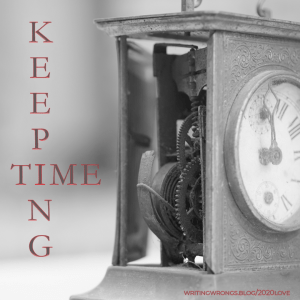
The mantel clock kept its own time. It was fussy, too, in the way old clocks sometimes are, refusing to work when wound in a way it found unacceptable. Because of this, in each generation, the task fell to either the youngest or oldest member of the household.

Maisey was five when her grandmother showed her how to wind the clock. She bounced on the balls of her feet, her fingers itching for their turn. She’d warm the brass key in her palm, the way her grandmother did. Every evening they’d clean the old clock with a soft cloth and lemon-scented polish.

“Pay attention,” her grandmother would say. “It will soon be your turn.”

“When, Grandma, when?”

Her grandmother chuckled. “Not soon enough for your father.”

But when Maisey’s turn finally came, her feet no longer bounced. After the funeral, she dragged a chair through the gathering, cutting off words about her grandmother—some soft, some less so—and clambered up to reach the clock on the mantel.

“Maisey!” Her mother’s voice cracked, its edges so sharp that, if it were a real thing, you could cut someone with it.

“I promised Grandma,” Maisey said.

In the middle of murmured condolences and her mother’s sobs, she pulled out the key and wound the clock.

When her father retired, Maisey offered the key to him. But he had too many golf games—and then, too many back problems—to bother with an old clock. Her mother spent so much time canning tomatoes (which no one ever ate) and volunteering (which gave her a headache) to remember the old timepiece gathering dust on the mantel.

So Maisey dug out a chain from her jewelry box and hung the key around her neck. The clock ticked on, grateful for the gentle touch of Maisey’s fingers. When she packed the car for college, she placed the clock in last, belting it into the front passenger seat.

She went through three roommates until the campus housing department found one who didn’t mind the faux mantelpiece taking up half their dorm room. After one too many broken hearts, Maisey let each perspective boyfriend wind the clock at least once. In the end, she picked the man with the lightest touch and most nimble fingers. She learned there were advantages to this well beyond winding clocks. When she graduated, she took him, the faux mantelpiece, and the clock.

Together, they built a life.

When at last her granddaughter was born, a girl whose eyes shined each time she heard the clock tick, Maisey knew her own time was drawing near. These days, she polished the clock more often, fussed over its placement on the mantel.

“We need to spruce you up,” she’d say. “Can’t have you looking your years—not like me.”

The wood casing gleamed in the light. When little Tessa pressed a finger against its side, she gave Maisey a delighted smile.

“Oh, Grandma! It’s warm.”

It always was, this old clock, warm and constant.

“You have always been my loyal companion,” she told it on the day she loosened the chain from around her neck.

Einstein once said, “The only reason for time is so that everything doesn’t happen at once.” But what if, for the briefest moment, she could defy that rule—and even Einstein himself—by passing on the key before passing on herself? When Tessa turned five, Maisey presented the key to her, chain and all, and hovered while the little girl wound the clock for the first time.

And yes, there it was, her life, all of it, from her own grandmother’s death, the scrape of the chair across the floor, sharp braces against her lips, the whisper of taffeta prom dresses, textbooks weighing down her arms. Timothy on bended knee, the mantel and clock behind her, as if peering over her shoulder. On it went, in one great wash through her blood—all of time, all her life, all at once.

“What now, Grandma?” Tessa asked.

“Keep it well, my dear,” Maisey said, “keep it well.”

That night, the clock stopped ticking.

The afternoon of her grandmother’s funeral, Tessa dragged a chair across the floor and scrambled up to the mantel. She turned the key once, twice. Tessa inhaled lemon-scented dust, then held her breath. Behind her, the air shook. She turned, saw her mother, whose body trembled with sobs. Tessa jumped from the chair and threw her arms around her mother.

From the mantel, something shifted inside the clock. A single tock shuddered through its wood casing. Then, once again, the old clock started keeping its own time.

Keeping Time was first published by Kazka Press. It was subsequently produced in audio by The Centropic Oracle. You can listen to the story here.

Miss a story? Find all the titles here.
Free Fiction Friday: The Goblin and the Pixie

It wouldn’t be February without a pair of star-crossed lovers.

Everyone knew that pixies were cruel. Those teeth. Their words.

A conversation with one was like dying from a thousand tiny cuts. You might think: one or two scornful remarks won’t matter. But they added up, faster than you could count.

That was why Renate kept her distance. That, and because she was a goblin. And not one of those flashy lime green ones, or one a delicate shade of violet. She was brown, like the bark on the trees of the forest she called home.

Practical, but dull.

But the pixie? Oh, he would dazzle you—lithe, sultry. His talent was the piccolo, as Renata soon learned, but he could sing and dance and execute all manner of acrobatics. His wings were a glittery sapphire while his skin was the icy hue of a January sky.

He was so beautiful, his features elegant and lovely, even those razor-like teeth. Renata felt a bit chagrined for her admiration. It was shallow, wasn’t it? It made her shallow, didn’t it? She didn’t even know his name. Pixies seldom confessed such things, not even to a lover.

If you knew a pixie’s name, the saying went, then you knew their entire heart.

But never, in all the annals of history, had there ever been a goblin-pixie pairing. So Renata dreamed her unattainable dreams safe in the knowledge they were only that.

Until the day the pixie fluttered down from the sky and landed on the forest floor in front of her.

His feet barely whispered against the carpet of fallen leaves. His wings hummed, and the sound was warm and soothing, like a lullaby.

“Why do you stare at me all day long,” he asked.

Renata knew she didn’t have quick wit—if this were a conversational trap, then she would walk right into it. So she saw no reason to be dishonest.

“Because you are the most beautiful being I have ever seen.”

With those words, heat burned her cheeks, her skin so hot she might set the forest aflame.

The pixie tilted his head. “Do you like how I play the piccolo?”

“I do, very much.”

He twirled, a perfect pirouette, and landed gracefully. “And my acrobatics? What do you think of them?”

“They are lovely.”

For a long moment, he scrutinized her. Then, he nodded once and took flight.

Odd things happened after that. Sweet music—that of a piccolo—accompanied her trek through the forest. The tune changed depending on what she was doing. Slow and thoughtful for rooting out mushrooms. Lively and quick for picking berries.

When she was helping a doe birth twins on a slushy spring morning, a warm buzzing sounded above her, shielding her and the doe from rain. Renata glanced up, but all she could see was the furious beating of pixie wings.

On clear nights, when she peered into the sky, her name would sparkle among the stars.

She searched for hidden cruelty and found only kindness.

The next time the pixie landed before her, stepping lightly across daisies and buttercups, Renata could do little more than clutch her hands beneath her chin.

“Why do you always brighten my day?” she asked.

“Because you brighten mine.”

“Me?” This she could not fathom. “How?”

“You know which of the forest’s bounty is edible, and which is not.”

“Don’t pixies know this?”

He flushed, a delicate pink spreading through his entire body. “It’s a good thing pixies have strong constitutions. I only know what to eat from watching you.”

“I can teach you.” Such boldness! Renata almost swallowed back the words.

But he inclined his head and continued. “You care for the forest creatures. You care for our home when the rest of us enjoy it, use it, but far too often disregard it.”

“I love the forest and everything in it.” It was as close as she dared come to confessing her feelings for him.

He took one step closer. “And you have the eyes of a doe and the skin the color of a wise oak tree. You are beautiful.”

She was about to protest or shake her head when he took another step forward.

“I am Simon.”

Oh? Oh.

“You know I’m Renata.”

“I do. May I kiss you, Renata?”

She didn’t think twice, although perhaps she should have. She knew of the teeth, of the cuts, of the pain. Kissing a pixie was something a steadfast, ordinary goblin like herself should never do.

Renata stepped forward.

She closed her eyes.

The kiss was warm, steeped in magic and honey. When the quicksilver taste filled her mouth and blood ran down her chin, Renata gasped. She felt no pain, had no cuts.

It wasn’t her blood.

It was his.

Simon had sliced through his own lips as to not injure her.

But a steadfast little goblin such as herself had a salve for that. She tended to his wounds, and by nightfall, he was healed enough to play the piccolo.

It took until winter, with the snow piled high around Renata’s little cottage, until they discovered a way to kiss without incident.

Neither one minded.

The Goblin and the Pixie was written especially for the (Love) Stories of 2020 project.

Miss a story? Check out the titles here.

Free Fiction Friday: The Burden of So Many Roses

The road to popularity at Fremont High School is paved with rose petals.

Or, to be exact (and I usually am), petals from three-dollar roses.

This year, I have a three-part plan to conquer those roses:

1. Money (Christmas, babysitting, minimum wage from the Sub Shoppe)

2. Handwriting samples (AP World History projects, chemistry lab, Spanish class)

3. Selection of boys (valedictorian, quarterback, swim team captain)

They’re all going to send me a rose on Valentine’s Day—even if they don’t realize it.

The problem? Girls from the cheerleading squad run the rose booth. I must make sure no one sees me take more than a few notecards. But a sweater with big pockets and a little misdirection work wonders. I slip in before school and give Sienna my biggest smile.

“For my best friend,” I say, a lie, of course.

One, that rose is totally for me. Two? Maybe next year at this time, I’ll have a best friend—or any friends, for that matter. First, I must tread the rose-petal path.

“Aw,” Sienna says. “That’s so sweet. Some girls don’t get any roses.”

Not that Sienna would know. She’s never been one of those girls. The thing is, everybody knows that girls buy for each other. It doesn’t make you popular. It doesn’t make guys think you’re hot. All it does is make you look desperate. I will not be that girl. Not anymore.

That night, I neglect calculus in favor of perfecting Marcus Hanson’s blocky boy letters and Toby Preston’s lazy scrawl. In the end, I spend fifty-four dollars for eighteen roses. I can always stash a few in my locker if lugging around so many roses turns out to be too much. On Valentine’s Day, I choose a pink sweater. When I walk into school and see Sienna wearing a similar style in a similar shade, I know it’s perfect.

This day will be perfect.

All morning, roses flood the classrooms. It’s a record sale, the principal announces over the PA system, with the proceeds going to Operation Smile. We are, she tells us, a most generous group of young people. Some more than others, I think.

More roses arrive, but by the time class ends, not a single one is for me. Next class. I’ll practically drown in all the roses. But by lunch, I trudge to the cafeteria empty-handed. Sienna, at the cheerleading table, has a stack of roses—red and pink and creamy white. She plucks one from the pile and hands it to a freshman girl passing by.

Oh, to be Sienna. To have roses to spare.

During chemistry, the collar of my pink fuzzy sweater chokes me. My armpits produce massive amounts of sweat. I blow an easy pop quiz. Then, I have the best thought.

All my roses will arrive during last class! I’ll stagger to my locker under their weight. When I pass Sienna, she’ll give me a secret smile, the sort only shared by girls who struggle under the burden of so many roses.

When the last bell rings, I stay rooted in my chair, convinced there’s been a mistake. Not a single rose! Mrs. Meyer clears her throat, then asks:

“Are you okay?”

I nod, but I’m not okay. I’m out fifty-four dollars. The path to my locker is strewn with other people’s rose petals. My books make my arms ache. I dial the combination, but don’t lift the handle.

“Hey, Emily.”

I turn. Toby Preston stands to one side, pink-cheeked and adorable.

“This is crazy,” he says. “But back in sixth grade, I never gave you this.” He pushes an envelope at me. “It was stupid, because we had to give everyone a valentine, but I didn’t want anyone to know I liked you.”

I hold the valentine like it’s made of spun glass. This is better than a rose.

“Would you like to go somewhere?” he asks. “Coffee shop, maybe?”

Oh! Even better. Who needs roses anyway? I nod and open my locker for my coat. Out spills a rose. Then another. They tumble out, cover the linoleum, bury me up to my ankles.

Toby’s cheeks blaze red. His Adam’s apple bobs once, twice, so hard my throat aches in response.

“I guess coffee’s out of the question,” he says. Before I can stop him, he sprints down the hall.

A custodian helps me clear away the roses. She loans me a pair of work gloves, but the thorns find my skin. One pricks my cheek, and I can’t stop the blood tear that rolls down my face.

“Seen this before,” she says after I shove the last rose to the bottom of the dumpster.

“Really?”

“It happens. Every few years or so.”

What happens?” I want to know why and what it all means.

Her eyes are kind, but she shrugs. “I think that’s up to you.”

I leave school empty-handed.

A block from home, I spot a little girl at a bus stop. In the center of the road sits a smashed shoebox. Red construction paper hearts flutter in the wind. Tires grind Red Hots and conversation hearts into powder. Her sobs fill the air but do nothing to stop the cars from plowing through her valentines.

“They’re all gone,” she says, “I don’t have any left.”

Neither do I. Then I remember Toby’s valentine. I pull it from my backpack. The wind nearly steals it, so I hang on tightly. Then I wonder if I can let it go.

“What’s that?” the little girl asks.

“It’s yours.” I kneel at her side and hand it to her.

“Oh! It even has my name on it! Right here. It says Emily.”

“See? It was meant for you.”

She skips down the sidewalk, clutching Toby Preston’s valentine to her chest. I turn for home. Only when I reach the front porch, do I feel it.

I am one rose lighter.

The Burden of So Many Roses was first published in Kazka Press as part of their monthly contest. The theme was an undelivered Valentine. And it’s one of those Valentine’s Day stories for when you’re not feeling Valentine’s Day.

I was thrilled when Toasted Cake picked it up for the podcast. Tina’s narration is, as always, amazing.

Miss a story? Check the titles here.

Free Fiction Friday: Steadfast

Poppy fell the moment Carlos showed her his feet. She’d never met a man—or rather, a civilian man—with feet uglier than her own. But ballet slippers weren’t any kinder to toes than combat boots were.

Before she saw him, she’d planned on making a tactical retreat from the reception. It’d been a mistake to take leave for this wedding, an even bigger one to wear her dress uniform. Coming home never worked. Hadn’t she learned that by now? Too many awkward questions, too many thank yous.

What made her pause at the ballroom’s entrance, Poppy couldn’t say. She didn’t see the groom twirling his bride or the bridesmaids in clouds of chiffon floating across the parquet.

Only Carlos.

With uncommon grace, he crossed the room. He navigated the maze of chairs, tables, and guests like a man intimately familiar with each muscle of his body. When he landed in front of her, he didn’t speak but merely held out his hand.

“I don’t dance,” she said.

“Everybody dances.”

“Not me. I march.”

He tipped his head back and laughed. “I can dance well enough for both of us.”

And yes, he could. Demanding to see his feet came several glasses of champagne later.

“Stay,” he whispered the next morning. “Spend the week with me. You can come to rehearsal. I’m dancing the role of the steadfast tin soldier.”

She laughed at the audacity of it, of burning a week’s worth of leave in New York City, with this beautiful man whose world was so different from her own.

“Do you know anything about being a soldier?” she asked.

“That’s why I need you. You can be my technical advisor.”

“No one will believe that.”

Everyone did. Or, rather, they indulged their principal dancer. She taught Carlos how to drill with a wooden rifle. During breaks, he taught her how to hold herself so he could lift and spin her around.

With Carlos, she could dance. With Carlos, she was weightless.

At the airport, he tucked a necklace into the palm of her hand, the pendant an exquisitely engraved poppy.

“We both have demanding mistresses.” His words were so soft she barely heard them above the clamor of traffic and travelers. “You don’t need to come home to me. Just come home.”

She wore the necklace every day in Afghanistan. Poppy no longer regretted attending the wedding, or even wearing her uniform. Her only regret was never seeing Carlos dance on stage.

They wrote letters, the old-fashioned kind, hers torn from a notebook, the paper encrusted with sand and dotted with dirty fingerprints, his on the back of paper placemats, or cleverly crafted in the margins of playbills.

Then her world erupted in fire. When the burn subsided to mere embers, it was too late and Walter Reed a world away from New York City. Still, Poppy vowed: she would see Carlos dance.

Sleeping Beauty gave her the chance.

She had flowers delivered to his dressing room—white roses laced with red poppies. That way he’d know. That way, if he didn’t want to see her, he could hide until she abandoned her vigil at the stage door.

Poppy waited there, her head still buzzing from his performance, her weight sagging into the crutches, her foot heavy in its cast.

Her cheeks flamed when she caught sight of him emerging from the door, her skin hot against the December air. He scanned the alleyway behind the theater. The moment his gaze met hers, he froze.

“Bet my feet are uglier than yours now,” she said.

He exhaled and laughed. It was only then she saw the poppy tucked in his lapel. He took in her crutches, her foot in its cumbersome cast. His eyes grew somber.

“My steadfast soldier.”

“I’m home,” she said.

He moved close, fluid and graceful, and cupped her cheek with his palm. “So am I.”

All at once she was weightless.

Steadfast was first published at Flash Fiction Online (and was nominated for a Pushcart Prize as well). It was my attempt to retell Hans Christian Andersen’s The Steadfast Tin Soldier.

So I did, with a gender flip and an unapologetic happy ending. And if you like, you can also read a review of the story here.

All in all, how could I not share this story on Valentine’s Day.

Miss a story? Check the titles here.

Free Fiction Friday: Rules for Visiting Hades

It’s spy vs. spy. Or a cautionary tale of “workplace” romance.

Berlin, May 2005

I knew he stood behind me before I caught his reflection in the window of a passing Mercedes. That sensation started at the base of my skull. The skin of my throat tightened. My heart thrummed—like it hadn’t in years.

I’d come back to Berlin to stare at the spot where Checkpoint Charlie once divided a city, a country, a world. Just me and all the other tourists, many of them so young they confused Berlin’s wall with Pink Floyd’s.

You are now leaving the American sector.

“So,” he said, at last. “Do you miss it?”

“What?”

“The cold war.”

Of course. Why not ask Persephone if, during spring, she missed Hades?

“Do you?” I asked.

“It was easier to tell who the good guys were.”

Peace through superior firepower.

Only then did I turn to look at him. “Do you think so?”

“Don’t you?”

I didn’t know what to think. What did you say to a man who looked like Cary Grant and spoke Russian with all the poetry of Pushkin?

“I knew the world was changing,” he said, “when I woke on January first, 1990 with the most amazing hangover.”

I knew months before The Wall crumbled that my world had shot off-kilter. A missed phone call. A missed meeting. A missed drop. Patterns. We were taught to look for them, piece them together, create a whole from a few lone indicators.

In those days, it was never a matter of who would betray whom, but when you played that card. I’d always wondered if I played mine too soon. Seeing as I wasn’t part of that amazing hangover, I knew. I’d been too late—a spy who didn’t know to come in from the cold.

Welcome to the new world order.

I found, after years, a cold sort of comfort in the old myths, about Persephone, about Orpheus and Eurydice. Clearly, there were rules for visiting Hades:

  • If you find yourself caught there, don’t eat the food.
  • If you’re leading someone out, don’t look back.

I did both.

On any given day, Vienna, or Prague, or Berlin could look a lot like Hades. And Persephone’s pomegranates were always in season.

“So,” he said. “Do you miss it?”

“I do.”

“Then will you have a drink, for old time’s sake?”

“You drink?” I asked. Amazing hangovers notwithstanding, he’d long ago lost his taste for alcohol. I still had my sources.  And that much I knew.

“Occasionally,” he said. “I’ve always had a fondness for White Russians.”

A blush curdled beneath my jaw and spread across my cheeks. It’d been a long time since I’d seen twenty-five, but you wouldn’t know it by the way he looked at me—a look that worked on a thousand women, myself included.

“And do you still drink?” he asked.

“Occasionally,” I echoed. “Cosmopolitans, mostly.”

“All things American.” He laughed. “I’m not even sure what’s in one of those.”

“Vodka.”

“Oh, of course,” he said. “American with a twist.”

“And cranberry or pomegranate juice,” I added, just to be perverse.

“Which do you prefer?”

I thought for a moment. “Pomegranate.”

He offered his arm, a gesture reminiscent of Vienna, Prague, and even Berlin.

Gentlemen, we have détente.

I’d always believed that Persephone, like Eve, chose to taste the fruit. Now I wondered. Perhaps the fruit chose her.

I took his arm. We turned from Checkpoint Charlie, left it behind us.

This time, I didn’t look back.

Rules for Visiting Hades first appeared in the Flash for Big Cash Contest Anthology, March 2007. Hades placed third, and I won $50. So I guess you could say I flashed for moderate cash.

Miss a story? Check the titles here.

Free Fiction Friday: Dragon’s Bane

Sometimes the best friendships are the unconventional ones.

Something is different in this part of the forest. Even the ground beneath Kit’s feet feels unsubstantial to her sneakers. Like the solid earth might crumble away at any moment, and she would plunge into nothing.
Everything in her world feels like that right now—a slow and steady crumbling—all her plans, the heart that beats in her chest, even the lease on her studio apartment. Worst of all, her one bit of solace, the forest, spins around her, nothing solid and sure.

Except when she stumbles upon an old log. She’s been here before, in this part of the forest, but how is it she’s never seen this particular clearing, with this particular log?

The log is huge, reaching halfway up her thigh. The surface is rough even through her jeans, the bark baked warm by the sun.

Kit pulls out a thermos. Before her trek into the forest—ostensibly to think, but really, it was running away—she brewed hot cocoa. The real kind, in a pan on her two-burner stove. She measured out the cocoa and the sugar, adding a dash of vanilla and cinnamon.

Now she uncaps the thermos, and the aroma rides the crisp autumn air, filling it with rich chocolate and a hint of wood smoke. Kit inhales, and for that single moment, everything is okay.

Then the log beneath her rumbles. It’s a rolling, tumbling, undulating motion that makes her think of a rollercoaster—and sends her plummeting backward and onto the ground.

She lands hard, breath leaving her in a whoosh, hot cocoa sloshing in the thermos. Somehow—somehow—she holds onto it, holds it steady and upright.

It’s then she finds herself staring into a pair of huge amber eyes. They are the size of Kit’s head—at least—and they glow with intensity. Beneath those eyes, she spies a snout and a pink, forked tongue.

She follows the elegant line of a neck to the large hump she earlier took for an old-growth log.

“You,” she says now, testing her voice in the still air, “are a dragon, or I’m losing my mind.”

The creature snorts, the scent of wood smoke with a hint of brimstone infusing the space around her.

“Although, I suppose there are worse ways to lose your mind.”

The dragon snorts again as if in agreement.

“I’m Kit.” She doesn’t hold out her hand. One, she’s still clutching the thermos. Two, she’s not certain dragons shake hands.

The dragon bows its head in acknowledgment. Then, like a whisper, a word lights in Kit’s mind.

Taggledorf.

“It’s nice to meet you, Taggledorf.”

The dragon thumps its tail once, and the earth shakes.

But this time, it doesn’t feel as if the ground will crumble beneath her.

* * *

Kit visits the spot often. Taggledorf doesn’t always appear. Even when she—it’s a long and complicated bit of pantomime to determine that Taggledorf is a she—doesn’t, her presence is there. The air holds that scent of wood smoke. Sometimes there’s brimstone.

But everything in that particular clearing grows a bit lusher, smells a bit richer. Hummingbirds flit and dragonflies buzz. In the winter, there is enough warmth radiating from Taggledorf’s back that Kit can spend hours in the cold.

She brings the man she wants to make her husband to this spot. She does not expect Taggledorf to appear, but yes, it’s a test. Her heart is still tender and cautious. While this man fills her with certainty, so did the other, the one that had her fleeing to the forest in the first place.

When she returns alone a week later and finds the clearing alive with forget-me-nots and wild roses, she has Taggledorf’s answer.

She weaves a crown of roses for her friend, and when Taggledorf does appear, a bit shy, Kit places the wreath on the dragon’s head.

“We will always be friends,” she says.

* * *

She brings her children to this spot, spreading a soft, flannel blanket across the clearing. In summer, they drink lemonade, in winter, hot cocoa. Taggledorf makes her scales shimmer and shine. The children spend hours slapping the scales with their chubby hands, squealing and shrieking with delight.

One time, the warm sunshine lulls Kit into a nap. She wakes, heart pounding and terrified, only to find that Taggledorf has corralled both children with her tail.

“Thank you, my friend.” Kit sighs and leans into the old-growth that is and is not Taggledorf’s midsection. “Thank you.”

* * *

Kit discovers that Taggledorf loves stories. It’s when she reads to her children that the dragon’s scales glow and hum. Picture books and Mother Goose, eventually graduating to chapter books. Her children sit on the dragon’s back and take turns reading aloud.

When they’ve moved on—to novels and textbooks and quantum mechanics—Kit takes to reading in the clearing any time she can. The heat against her back tells her which stories are her friend’s favorites.

When her eyesight dims, and her hands no longer can hold an e-reader, never mind a paperback, she plays audiobooks for them.

In the sunshine, they rest, safe in the knowledge that nothing changes as long as the story goes on.

* * *

It has been months since Kit has visited the clearing, maybe even a year, but she doesn’t want to think hard enough to count. Today is perfect for a trek—her last trek to her clearing.

The spring air is warm, but the path is still clear of summer growth, those brambles and branches that might trip her up.

Even so, the walk is long, much longer than when she pushed a double stroller along the dips and ruts. By the time she reaches the old-growth log that isn’t a log, her legs nearly give out beneath her.

“No stories today, my friend. I only want to rest, with you.” She sinks against her friend, knowing Taggledorf will cushion her fall. “I have no wish to be found until … after.”

She snuggles against the dragon with the full knowledge that stories go on, but hers ends now.

And thanks to Taggledorf, it was a good one.

* * *

The girl smells familiar. This is the first thing Taggledorf notices. The second is the salt, so strong it has chapped the girl’s cheeks and flavors the air.

Grief is something that can fill your mouth. This is something Taggledorf knows. It is something this girl is learning.

The girl settles next to her, back against Taggledorf’s midsection, the very place where she—the other she—sat for so many years. The girl’s body shakes, and Taggledorf lets the fire that always burns in her belly flare a bit—enough warmth to comfort and soothe while she ponders this girl.

She feels right.

Not everyone does, of course. That is the dragon’s bane. So many of her kind have abandoned friendship, opting to gradually become the landscape they occupy.

But Taggledorf knows that despite the grief and goodbyes, a good friend is a story unto itself.

So she opens her large amber eyes and stares at the girl.

The gasp has more delight than fear.

The fingers are gentle against Taggledorf’s snout.

“I miss her,” the girl says.

Taggledorf nods. She does too.

“I’m Carly.” The girl doesn’t hold out her hand. She already knows that dragons don’t shake hands.

Taggledorf blows a stream of smoke into the air. In it, is the sound of her name.

“It’s nice to meet you,” Carly says.

The dragon thumps her tail once, and the earth shakes.

And for now, at least, it doesn’t feel as if the ground will crumble beneath either of them.

Dragon’s Bane was written specifically for the (Love) Stories of 2020 project.

Miss a story? Check out the titles here.

Free Fiction Friday: Lucky

For week two, I offer up a different take on sibling love.

“You’re lucky you didn’t bleed out.”

He says this as if I’m the one who built the explosive, dug the hole, ran the wires, and then—after all of that—pulled the trigger myself.

“Lucky,” he says, again, in case I didn’t hear him the first time.

I did, of course, through the haze of whatever is running through my veins. Morphine, maybe? I don’t know. Do they still use morphine? Whatever it is, whatever opiate fogs my thoughts, it is lovely and seductive. It tastes like temptation and blood. I’m glad—no, lucky—I don’t know its name.

I won’t be able to ask for it on the outside.

He sits at my bedside, easing back the sheet that covers me, the stethoscope barely there against my skin. He’s warmed it, I realize, warmed it against his palm. He probes, and while I’m naked, I’m also bandaged clear up to my armpits. Not that there’s any modesty in an Army hospital. Not that there’s any modesty in the Army.

My breasts are bound, like those of women warriors of old. Through the fog, I can see these women. They are fierce, with hair like coiled snakes. Their armor shines in the sun. Their weapons glint in the moonlight.

Were they lucky as well? Did they ever bleed out?

My gaze flitters down. The bandages are white and pure. They are armor in their own right.

“They didn’t have to amputate,” he says.

At first, I think he means my breasts. I blink, the fog of morphine, of war, of my own thoughts too thick for me to make sense of his words. Then I understand.

“I know.” What I don’t mention is I can see my reflection in the window. I can count the number of legs I currently have.

“An infection, though.”

“Try not to sound so hopeful.”

He grimaces. “Katy-bird—”

“Don’t ‘Katy-bird’ me.”

“You shouldn’t be here.”

You shouldn’t be here.”

He’s not my doctor. He’s not even assigned to this ward. He’s breaking all the rules—Army rules, medical rules. But he’s my brother, which is why everyone glances away when he does.

“I could send you home.” He delivers the threat in the way only a big brother can.

I stare at the window. There is no view. Even my reflection has faded. All I see is the glint on the glass that looks like the blade of a sword.

“I don’t want to leave them.”

“Them,” he says. “Your platoon?”

I want to nod; I want to shake my head. It’s my platoon—yes, of course, it is—but it’s so much more than that.

“I don’t want to leave me.”

Now he stares at the window as if he, too, can see the images of warrior women in its reflection. His nod is thoughtful, the sigh heavy—the sound only an older brother can make.

He threads the stethoscope through his fingers and then pockets it. He touches my cheek.

“You’re sure?”

Something shifts in his tone. All at once, he is not a doctor, not my older brother. He is simply Scott, and he looks as confused as the morphine is making me feel.

“I can’t leave.”

He nods as if I’ve explained my entire self in those three words. People leave all the time—wounded or killed in action or by their own hand. I don’t want to leave, not now, not ever. Here is where I can see the warrior women.

He kisses my forehead. It’s tender and filled with the warmth of absolution. At the doorway, he pauses, one last time.

“You’re still damn lucky you didn’t bleed out.”

For a moment, everything else fades—the war, the morphine, the glint of swords on the glass.

Yes, I want to tell him. I know.

I’m lucky.

Lucky may be my story that has racked up the most personal rejections, ever. It even snagged an honorable mention in Glimmer Train’s Very Short Fiction contest. Sometimes those stories everyone seems to love (but nevertheless declines) can be the hardest to sell.

Miss a story? Check out the titles here.

Weekly writing check-in: starting 2020 with a sale!

Not only did I kick off the (Love) Stories for 2020 project this week, but I made a sale!

I sold a story to one of my “bucket-list” markets: a flash fiction piece to Daily Science Fiction.

So, yes, that was an excellent way to start the year. More details when I have a publication date.

I’ve been busy offline over this holiday. It’s a good thing I scheduled January’s story posts early. Otherwise, my 2020 project would not have started in 2020 (or at least not right away).

I’m looking forward to doing some new and creative things with my writing this year. Not so much goals and New Year’s resolutions–but I do have plans. I hope to talk about those in the next few weeks or so.

In the meantime, you can go check out the year’s first story: Gretel and Hansel.