Even more Betsy, Tacy, Tib … and me!

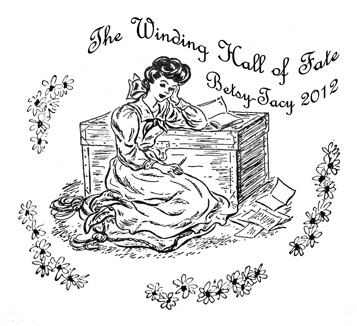
The flyer pretty much says it all:

You can also find more information on the event here. I’m excited, and nervous, and all wound up in general. With a little luck, I’ll be able to give a report sometime next week. I also hope to share a little bit of news as well. We’ll see.

In the meantime, I’m excited, and nervous, and all wound up in general.

Writing vortex and must-read writing blog

If you’ve ever read Little Women, you’ll know that Jo March falls into writing vortexes. Well, I’m here to tell you that they exist–because that’s where I’ve been for the past few weeks, and in particular, this last week or so. I’m enjoying my time there. It’s been a while since I’ve ended up in a vortex so whirlwind-y with words and characters.

I’ll be back at some point to blog about all our summer adventures. There’s Girl Scout troop horse camp coming up and then the Betsy-Tacy Convention. July looks jammed packed with fun.

In the meantime, for you writers out there, I want to introduce you to a must-read blog:

The Bane of Your Resistance

Not only is the name epic–a play on author and creativity coach Rosanne Bane’s last name–but the website is as well. So many applicable strategies and tactics for whatever writing challenge you happen to be facing.

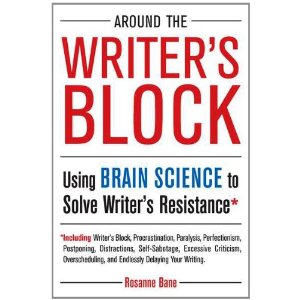
Even better? Rosanne has written a book on brain science and writing. Some of you know that if it’s a brain book, I’m all over that. Ditto for the writing books. So, brain science and writing? Together at last? It’s going to be Christmas in August.

Around the Writer’s Block: Using Brain Science to Solve Writer’s Resistance comes out on August 2nd, and yes, I’ve already pre-ordered. I’m also hoping to attend the launch as well.

Enjoy! I’ll be back once this vortex settles a bit.

Betsy, Tacy, Tib … and me!

Remember way back in May when I waxed nostalgic about Betsy-Tacy books over at Jennifer Hubbard’s blog?

Well, one thing led to another (as things are wont to do) and I will be on the author panel and signing books on July 21, 2012 at the Betsy-Tacy Convention in my hometown of Mankato, Minnesota.

Am I excited? Completely. Is Kyra, who will be going with me? Also completely. We will, of course, need new outfits befitting such an event.

It just goes to show you: You never know where your writing might take you. In my case, it’s taking me back home–and I couldn’t be happier.

Life on the Plateau — an extended metaphor about writing

When you traditionally publish a novel, you enter into a tacit agreement. You can no longer speak of wanting more. Millions of unpublished writers would love to trade spots with you. They yearn to have your one agent, your one published book, your one award nomination.

And, you, published writer? It’s unseemly to want more. So you bottle up your writing/career frustrations, mentioning them only to other authors, in back rooms, in the dark–and only on the third Sunday of every month.

It’s only after the long, dark haul that you can bring these frustrations into the light, and then, as an afterthought: I’ve achieved this new thing–and here are the struggles I went through to get there.

Thing is, shedding light on the dark times, while we’re in them, might help all writers. Whether it’s a matter of craft or career–or both–anyone can hit a plateau.

My story:

I reached this particular plateau with my writing partner Darcy Vance on May 19, 2009. That was when The Geek Girl’s Guide to Cheerleading was released. But on the last leg of the climb up, I hurt myself. So while Darcy danced around the campfire and other writers sprinted past and scaled greater heights, I nursed my injuries inside my tent.

(In real life, right after our book launch, I got terribly sick, lost twenty pounds in less than two weeks, and couldn’t leave the house for a while. Eventually I was diagnosed with an autoimmune disease.)

Darcy would circle around, pausing in her joy of being a publish author, to check on me. My mom worried too. I plastered my perky YA author smile on my face and pretended everything was okay.

Three years later, and I’m still on the same plateau. Oh, sure, I’ve left my tent. I’ve tried on some new equipment. I’ve taken a few test runs, explored a path all of us (me, Darcy, our agent) knew might result in a dead-end. Eventually it did. But I haven’t left the plateau.

Some writers settle here, seemingly happy with where they are and what they’re doing. Others sulk in their tents, bitter, resentful, and cold. A few find their way back down the mountain.

Some of us take on that cliff wall, skin scraping, fingertips bloodied, only to fall off at the slightest bump against our shoulder. A rejection hurts more than it should at this point in our journey; a casual comment meant to help derails us for a week.

Here’s the thing about scaling this writing mountain: At first, you run so fast. Sure, you might stumble and skin your knee, but you’re up again quick, ready to tackle the next foothill. It feels great, like you never want to stop running. Then the slope gets steeper. Sometimes the path isn’t so clear and you run straight into a cliff wall.

There’s a first plateau where, I think, a lot of writers get stuck. They run up to it quickly, stop to catch their breath, then never continue. Or they circle back around, running up and down that part of the mountain–starting and stopping, starting and stopping. Their battle cry is usually, “This time I won’t let real life get in the way.”

But real life–or something that resembles it–always does.

But there are things–good things–you can do while stuck on any plateau:

Get a resupply from base camp: You can only subsist on reconstituted freeze-dried meals and trail mix for so long. In writing terms, remember to refill the creative well. Read (not just fiction, but rich and varied nonfiction), watch movies and documentaries, go to museums. Take a walk; take care of your body.

Weigh all options: The well-worn, obvious path may not be the one for you. Maybe you need to go around instead of over. Or maybe you need to tunnel through. The publishing landscape is changing and shifting all the time. What’s impossible today might be standard procedure tomorrow.

Heal and rest: Sure, you might be able to continue to the next level, but if you’re injured or exhausted, stop for a bit to rest or heal. Otherwise, you might find yourself tumbling back down and landing hard–maybe too hard to get back up again. Besides, the race isn’t always to the swiftest, and it isn’t really a contest to begin with.

Lend a hand: If you’re on a plateau–any plateau–you can see things writers below you can’t. Don’t kick rocks at them. Instead, lean down and offer your hand. They may do the same for you someday. And if that particular writer is the sort who kicks rocks at others? Not your concern. It’s why avalanches exist.

Start from scratch: Give yourself permission to try something new and unrelated to your main goal of scaling the mountain–hang-glide, rappel. Or in writing terms, take a poetry class, write a screenplay, try flash fiction. It will remind you of what it’s like to have that beginner’s mind, where nothing is impossible.

I honestly don’t know if I’ll ever be capable enough to leave this plateau I’m on. Sometimes I think not only don’t I have the skills to climb higher, I’ve lost the skills I had to reach this place. My pack feels heavier. It’s filled with expectations (mostly my own) of what I must do.

But there’s one more thing you can do while waiting on a plateau:

Enjoy the view.

(And don’t kick rocks.)

In which I wax nostalgic about Betsy-Tacy books

I’m over at Jennifer Hubbard’s blog, waxing nostalgic about the Betsy-Tacy books by Maud Hart Lovelace.

Jennifer is a 2009 Deb and the author of The Secret Year and Try Not to Breathe.

In which I write a poem about Carl Faberge

So, for a variety of reasons, I decided to take a poetry class. Poetry is one of those things that has always mystified me–it’s cryptic and obscure and part of me was certain this was a mistake.

Guess what? I’m kind of loving it. It’s not always easy. This week’s assignment was to write a sonnet. Fortunately, the only requirement we had to meet was the fourteen lines. The ten syllables per line and the rhyming scheme were optional.

I gave up on the rhyme early, but I wanted those ten syllables per line–and I was going to get it. So I sat in the lobby where Kyra takes dance and beat out syllables on my notebook. You know how some horses can “count” with their hooves? Yeah. It was kind of like that.

Since I was the only parent there at the time, I didn’t need to explain myself. Which is a good thing, since I probably would’ve responded with:

“I’m trying to write a %$#@-ing sonnet.”

The week before we wrote persona poems. This is a poem from the point of view of someone or

something else. So naturally, I wrote about Carl Faberge. My instructor didn’t respond–and didn’t respond. I figured I broke the class or at least his mind a little bit.

He was probably just having a busy week, because when he did respond, he called it remarkable and said:

You should check out some literary magazines you like and send it out.

As if it’s that easy. And I’m thinking: Here’s my secret talent. Finding the most unmarketable subject ever and rendering it in the least commercial form possible.

If “Two Hammers” (yeah, an inspired title, that) ever finds a home, you’ll be the first to know.

Another good review and 99 cents too!

Hey, what do you know? There’s another nice review of e-anthology The First Time, over at Eli to the nth. And … I’m not just saying that because she liked The Trouble with Firsts (but she did).

Even better, The First Time is now on sale for 99 cents at both Amazon and Barnes and Noble. For how long? Who knows. So if you don’t have your copy, you might want to hurry. Twenty five stories for 99 cents? You can’t beat that with a stick. (Well, you could, but you’d break your e-reader and nobody wants that.)

Waking up to a terrific review

Over at Long and Short Reviews, in the YA/Middle Grade section, there’s a terrific review of the 2009 Debs e-anthology The First Time.

And I’m not just saying that because the reviewer said some very nice things about my story, The Trouble With Firsts. (Although she did. Click through to read.)  But she went above and beyond the call of reviewing. This is one thoughtful and comprehensive review, which touches on nearly all the stories included in the anthology. Considering there are twenty five stories in the anthology, that’s no small feat.

All in all, not a bad way to start the morning and the work week. Thanks to Long and Short Reviews and reviewer Honeysuckle.

There’s always room for Pi(e) and YA

Happy Pi day! Mmmm …. pi(e).

There’s always room for some pumpkin pi(e). And yes, now I will stop making pi(e) jokes.

In other news, I’m blogging today over at Chick Lit Writers of the World about my top five reasons to read and write YA. Stop on by and add your own reason(s) in the comments if you’re so inclined.