25 Days of Debs: day 1 Jessica Verday

I’m celebrating the release of The First Time by highlighting all the Debs and “the first time” that brought us together: our debut novels.

Following the theme of firsts, I’m starting with Jessica Verday, who acted as publisher for this anthology. I can’t imagine the anthology coming together as it did without her efforts–she coordinated the cover art, the editing, did all the behind the scenes work at Amazon and Barnes and Noble (no easy task, that). If anyone deserves to go first, she does.

Not only that, but she’s a New York Times bestselling author.

Jessica’s Firsts:

Anthology story: Once Burned, Twice Shy.

First line:

The worst thing about boys that you rescue are the excuses.

2009 Debut: The Hollow (Book 1 in the Hollow Trilogy)

Most recent: The Hidden (Book 3 of the Hollow Trilogy)

More about Jessica: Catch up with Jessica on her blog.

Remember, The First Time is available for Kindle and Nook.

The First Time now available!

The First Time, the e-anthology from 25 of the 2009 Debs is out and available for download for Nook and Kindle.

You never forget your first…

In THE FIRST TIME, 25 young adult authors contribute 25 stories all about firsts: first loves, first kisses, first zombie slayings, and more.

Featuring New York Times bestselling authors Carrie Ryan and Jessica Verday, plus a host of others. From humor to horror, and everything in between, these stories will make you laugh, cry, cheer, (and maybe even scream) as you experience something brand new from the authors that you love.

Contributing authors: Cyn Balog, Lauren Bjorkman, Leigh Brescia, Jennifer Brown, Kirstin Cronn-Mills, Janet Gurtler, Teri Hall, Cheryl Renee Herbsman, Stacey Jay, Heidi R. Kling, C. Lee McKenzie, Saundra Mitchell, Jenny Moss, Jackson Pearce, Shani Petroff, Carrie Ryan, Sydney Salter, Kurtis Scaletta, Jon Skovron, Kristina Springer, Rhonda Stapleton, Charity Tahmaseb, Jessica Verday, J. A. Yang, and Lara Zielin

The First Time is available for Kindle and Nook. Don’t have a Kindle or a Nook? Don’t let that stop you. You can download Kindle apps (for your PC, your phone, etc.) and Nook apps as well.

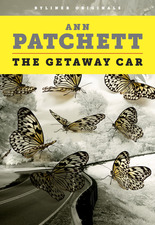
Reading Recommendation: The Getaway Car: A Practical Memoir About Writing and Life

The Getaway Car: A Practical Memoir About Writing and Life*
By Ann Patchett
Publisher: Byliner

Summary from Amazon:
“The journey from the head to the hand is perilous and lined with bodies. It is the road on which nearly everyone who wants to write—and many of the people who do write—get lost.”

So writes Ann Patchett in “The Getaway Car”, a wry, wisdom-packed memoir of her life as a writer. Here, for the first time, one of America’s most celebrated authors (“State of Wonder”, “Bel Canto”, “Truth and Beauty”), talks at length about her literary career—the highs and the lows—and shares advice on the craft and art of writing. In this fascinating look at the development of a novelist, we meet Patchett’s mentors (Allan Gurganas, Grace Paley, Russell Banks), see where she made wrong turns (poetry), and learn how she gets the pages written (an unromantic process of pure hard work). Woven through engaging anecdotes from Patchett’s life are lessons about writing that offer an inside peek into the storytelling process and provide a blueprint for anyone wanting to give writing a serious try. The bestselling author gives pointers on everything from finding ideas to constructing a plot to combating writer’s block. More than that, she conveys the joys and rewards of a life spent reading and writing.

“What I like about the job of being a novelist, and at the same time what I find so exhausting about it, is that it’s the closest thing to being God that you’re ever going to get,” she writes. “All of the decisions are yours. You decide when the sun comes up. You decide who gets to fall in love…”

This is a terrific, quick read that I recommend for anyone who wants to write or enjoys reading about writers and how they write. One thing that struck me is that Ann really emphasizes how much work writing is. I get a little tired of all the “let’s baby our muses” talk, the lighting of candles and playing of the just right music. Sit down and write already. Or as Ann puts it:

It turns out that the distance from head to hand, from wafting butterfly to entomological specimen, is achieved through regular, disciplined practice.

Yeah. She says it better than I do. Then there’s this:

Why is it that we understand that playing the cello will require work but we relegate writing to the magic of inspiration?

And the Pièce de résistance:

Art stands on the shoulders of craft, which means that to get to the art, you must master craft. If you want to write, practice writing.

Of course, it’s not all hard work for our Ann. Let’s visit the section where she acquires her agent. In summary: At twenty, Ann publishes her first short story in The Paris Review. An agent reads and calls soon after. Cue riding off into the sunset together.

Yes. I know. At this point, writers may want to do the reading equivalent of covering their ears and singing (off-key) “La, la, la, I can’t hear you.”

Because, really, all that’s missing from that scenario is Ricardo Montalban, resplendent in a white suit and pink, fruity drinks garnished with tiny, paper umbrellas. Ditto for the sale of her first book.

Even so, it’s clear the amount of work Ann put into that first book, and into her writing in general. Near the end of the piece, she writes about a period of time when she wasn’t writing and relates a bit of advice from musician friend: create a sign-in sheet and write down the time you start working (writing) and then the time you stop. Or as Ann puts it:

Time applied equaled work completed.

Sometimes this is a lesson we have to learn over and over again.

In brief, The Getaway Car is highly enjoyable and I recommend it to both writers and fans of Ann Patchett (bonus points if you happen to be both).

*Personal copy bought for my Kindle

In which Haruki Murakami describes my (almost) perfect day

It seems improbable that a total stranger can capture your perfect day*, but here it is. In The Creative Brain on Exercise, an excerpt from Haruki Murakami’s What I Talk About When I Talk About Running does just that.

When I’m in writing mode for a novel, I get up at 4:00 a.m. and work for five to six hours. In the afternoon, I run for ten kilometers or swim for fifteen hundred meters (or do both), then I read a bit, and listen to some music. I go to bed at 9:00 p.m. I keep to this routine every day without variation. The repetition itself becomes the important thing; it’s a form of mesmerism. I mesmerize myself to reach a deeper state of mind. But to hold to such repetition for so long–six months to a year–requires a good amount of mental and physical strength. In that sense, writing a long novel is like survival training. Physical strength is as necessary as artistic sensitivity.

I was struck dumb for a few moments after reading that. How on earth could a stranger describe my perfect day? Exercise? Writing? Reading? A little music? All wrapped up in early to bed and early to rise?

Almost perfect.

I say almost perfect, because I would love an extra hour of sleep. Back in the day, when I was in the Army (and specifically, Airborne School) I swore that if I didn’t have to, I’d never get up at four in the morning.

I remember standing there, in formation, bleary-eyed, already sweating, since this was Fort Benning, Georgia in July. The black hats would walk up and down the chalks, deeming us unworthy. I remember thinking: when the halcyon days of civilian-hood finally arrive, I am NOT waking up at four freaking a.m.

Guess what I do now? Yes, I wake up at four in the morning. At least on week days.  I would love to wake up at five. Five would be awesome.

And I’d have to move the exercise part around. I’m a morning workout kind of person (see above re: the Army). I might even be radical and split the day–some cardio and weights in the morning and karate in the evening with the kids.

Yeah, I know. Radical. Then I might go home and drink some green tea, because I’m crazy like that.

I do suggest that if you create (and who doesn’t) that you check out the article. Barring illness (and a time I was really sick in 2009), I exercise every day. It’s as important to my writing as my actual writing time is.

* No, really, this is my dream day. Does anyone have a duller life than I do?

A young scientist’s work is never done

A few days ago, Kyra commandeered my desk to write her application for the Young Scientists Club at school. We do have other writing surfaces and she routinely does her spelling and math on them. Apparently, my desk is the spot reserved for serious writing.

The Young Scientists Club is very serious.

That being the case, I had her write a draft before writing her final answer on the application form. Then, I edited that draft for her, which needed some punctuation.

Kyra on punctuation:

Sometimes when I’m writing, I just get going and going with the words and I forget to stop to put in the periods.

And yes, her essay was one long compound sentence (and … and … and).

In the end, she decided that she wants to be part of the club because she wants to be a scientist and invent helpful gadgets for the world. Also, robots.

Kyra on robots:

Mama, wouldn’t it be cool if I invented a robot and it followed me home from the club?

I–for one–plan on welcoming our new Kyra-designed robot overlords.

I suggest you do the same.

View from the revision cave

So, I’m revising again. Because I like to. Everyone needs a hobby. This is mine.

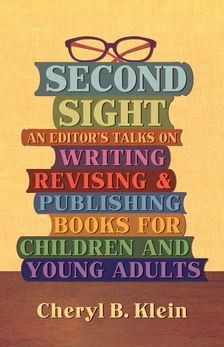
One of the first things I did was to list out the scenes in each chapter, essentially an outline, using the method from Cheryl Klein’s Second Sight book (I’m essentially doing the exercises listed here, along with some from another book).

Here’s what I discovered:

  • Wow. There’s a lot of crap in this book. I’m not sure I’m actually the one who put it there.
  • Why is there a chapter with only one scene?
  • Why is there one with seven?

To be fair, the very first thing I did was strip out the self-contained subplot for revamping and revision. So that lone scene in its own chapter wasn’t always quite so lonely. That fat chapter hoarding seven scenes? No clue. It’s like that reality TV show about hoarders, only in manuscript format.

I’m doing a lot of work with structure. Because that self-contained subplot? It’s in diary format, which is why it’s so easy to pull from the story. Weaving it back in? Yeah. Not so much.

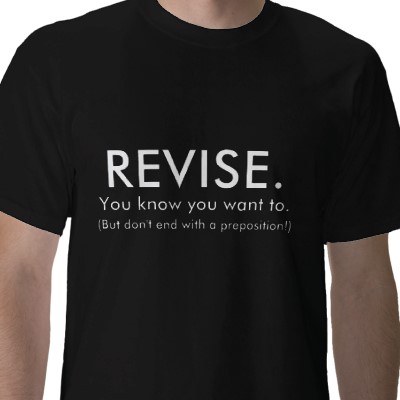
I think I’m going to need that T-shirt.

Taking (summer) stock

I haven’t been writing in my blog–uh, yeah, clearly–and I miss it. I really do. I have been writing. A lot, I think. When school started for the kids (right after Labor Day this week), I took stock of my summer. Just what did I do on my summer “vacation”?

Starting with Memorial Day and ending with Labor Day, I did the following:

  • Second draft of a middle grade novel I’m calling Speechless. ~ 42,000 words. This is the “that which does not kill you makes you stronger” draft.
  • Second/revised draft of my short story (The Trouble with Firsts) for the Debs anthology The First Time. Started at 7,800 and ended up just under 6,000 words. Cutting 1,700 seems like an arduous task, but once I focused on the story, it was relatively easy. I had a lot of things in there that would’ve been fine for a novel. Short story? Not so much.
  • Revised/edited Dating on the Dork side with Darcy for our agent. 83,000 words. Y’all can just keep your fingers crossed for us, okay?
  • Third draft of Speechless, which is the “draft other people can read and it won’t injure them” draft. 43,000 words (oh, I added to it!).

Bonus items:

  • Took a class on metaphors and did all the assignments. I’m so freaking proud of myself.
  • Read a terrific manuscript by my friend Joy Hensley and got to celebrate (virtually) her agent call/representation. Can you squee via email? Yes, yes you can.
  • Mentoring another writer via one of the RWA chapters I belong to.

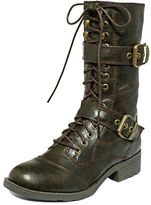
Oh, and I bought these awesome boots:

Okay, so the boots don’t = writing progress. Still. I think the potential is there for writing awesome things while wearing these boots.

So. How was your summer?

Teaser Tuesday: Second Sight

Teaser Tuesday and the rules are simple:

Teaser Tuesdays is a weekly bookish meme, hosted by MizB of Should Be Reading. Anyone can play along! Just do the following:

  • Grab your current read
  • Open to a random page
  • Share two (2) “teaser” sentences from somewhere on that page
  • BE CAREFUL NOT TO INCLUDE SPOILERS! (make sure that what you share doesn’t give too much away! You don’t want to ruin the book for others!)
  • Share the title & author, too, so that other TT participants can add the book to their TBR Lists if they like your teasers!

Let’s try a writing book this week, shall we?

It’s as Richard Peck says: “A good YA novel ends not with happily ever after, but at a new beginning, with the sense of a lot of life yet to be lived.”

From Second Sight: An Editor’s Talks on Writing, Revising, and Publishing Books for Children and Young Adults, by Cheryl B. Klein, pages 217 – 218.

Oh, I love that. It gets it just right, I think. When we did our blog tour for Geek Girl, Darcy and I would often refer to the “hopefully ever after.” But I think this is better.

And it’s not really a spoiler, since Second Sight is a book of essays, so you don’t need to read in order if you don’t want to. Cheryl also has a lot of excellent information online for YA and children’s writers. Check out her blog and her website.

Title and cover reveal: The First Time, the 2009 Debs anthology

It’s here! Isn’t it gorgeous?

The release date is scheduled for October of this year. My story is (tentatively) titled The Trouble With Firsts. It’s about first dates, prom, and humiliation. Not necessarily in that order.

I’m so very excited about this anthology and so in love with this cover, I think I want to go steady with it.

Geek Girl makes a list!

Our editor emailed us the other day to let us know that The Geek Girl’s Guide to Cheerleading was nominated for the 2012 Popular Paperbacks for Young Adults list, which is sponsored by the Young Adult Library Services Association (YALSA) of the American Library Association. Geek Girl is nominated in the Get Your Geek On category (appropriately enough).

Be sure to click through and check out all the books on the list. It could keep you reading all summer long. Plus, other 2009 Debs are keeping us company, such as Jennifer Hubbard (The Secret Year) and Jennifer Brown (Hate List).