Another good review and 99 cents too!

Hey, what do you know? There’s another nice review of e-anthology The First Time, over at Eli to the nth. And … I’m not just saying that because she liked The Trouble with Firsts (but she did).

Even better, The First Time is now on sale for 99 cents at both Amazon and Barnes and Noble. For how long? Who knows. So if you don’t have your copy, you might want to hurry. Twenty five stories for 99 cents? You can’t beat that with a stick. (Well, you could, but you’d break your e-reader and nobody wants that.)

Review: And The War Came: The Six Months That Tore America Apart

So yesterday, I sat down and finished the last book I wanted to read for the War Through the Generations Civil War reading challenge.

For my third (and last) book, I picked And the War Came: The Six Months That Tore America Apart by Jamie Malanowski, published by Byliner. I purchased this copy and read it on my Kindle Fire.

Product description (from Amazon):

To commemorate the 150th anniversary of the Civil War, Jamie Malanowski, lead writer of The New York Times’ highly acclaimed Disunion blog, masterfully recounts the origins of America’s greatest national tragedy in real time.

Drawing on diaries, speeches, and newspaper accounts of the six months leading up to the first shots fired on Fort Sumter, And the War Came chronicles the events that tore the nation apart, and delves into the hearts and minds of the men and women who tried in vain to avoid a conflict on American soil.

From the controversial election of Abraham Lincoln in November 1860 and the failed Crittenden Compromise to the secession of seven Southern states and the election of Jefferson Davis, Malanowski draws indelible portraits of the politicians and soldiers who controlled the country’s destiny. And by unfolding, week by week, the major issues and emotional nuances that led to the Civil War, he sheds new light on the darkest period in American history.

And the War CameAs Malanowski writes in the forward: The way we learn about history is strikingly at odds with the way we experience current events and life in general.

In the following pages, he does an excellent job of remedying this by presenting the six months that leading up to the Civil War in “real time.” In a combination of verbatim source material from diaries, speeches, editorials along with narrative written in mostly present tense, the era really comes alive.

I was immediately drawn into the narrative, which begins seven days before the election of 1860 and ends with the surrender of Fort Sumter. Each section, whether narrative, a diary entry, or an editorial, is fairly short. This makes the book fast paced and very easy to follow.

What it reminded me of is reading political blogs, news sites, and personal blogs. If you’re a news and political blog junkie, I think you’ll enjoy the way this book is written. Malanowski really does achieve his aim in putting us right there. A couple of times while I was reading, I had to pause and remind myself that the events described weren’t happening right now.

This is another one I recommend. It’s short, but packed with both information, attitude, and even humor (much of it at the expense of President Buchanan). If you’re looking for a quick, insightful way to round out your Civil War reading challenge, And the War Came: The Six Months That Tore America Apart by Jamie Malanowski would be a great choice.

Review: Midnight Rising: John Brown and the Raid That Sparked the Civil War

Midnight Rising: John Brown and the Raid That Sparked the Civil War by Tony Horwitz first caught my attention when it was offered on the War Through The Generations blog as a prize, one of three books generously donated by Macmillan Audio.

Alas, I did not win a copy of the book, but I went searching for it at my library. And there it was, in all its audio book glory. I put myself on the waitlist and hoped my turn would come up before the end of the year.

My turn did come up. And I’m happy to say it was worth the wait.

From Amazon:

Plotted in secret, launched in the dark, John Brown’s raid on Harpers Ferry was a pivotal moment in U.S. history. But few Americans know the true story of the men and women who launched a desperate strike at the slaveholding South. Now, Midnight Rising portrays Brown’s uprising in vivid color, revealing a country on the brink of explosive conflict.

Brown, the descendant of New England Puritans, saw slavery as a sin against America’s founding principles. Unlike most abolitionists, he was willing to take up arms, and in 1859 he prepared for battle at a hideout in Maryland, joined by his teenage daughter, three of his sons, and a guerrilla band that included former slaves and a dashing spy.

On October 17, the raiders seized Harpers Ferry, stunning the nation and prompting a counterattack led by Robert E. Lee. After Brown’s capture, his defiant eloquence galvanized the North and appalled the South, which considered Brown a terrorist. The raid also helped elect Abraham Lincoln, who later began to fulfill Brown’s dream with the Emancipation Proclamation, a measure he called “a John Brown raid, on a gigantic scale.”

Tony Horwitz’s riveting book travels antebellum America to deliver both a taut historical drama and a telling portrait of a nation divided—a time that still resonates in ours.

The book covers John Brown’s life and provides enough information on those around him (of both personal and historic importance) that I came away with a better understanding of this single-minded man and the time in which he lived.

While I enjoyed the entire book, the section that covers the raid and the summer build-up to it were especially interesting. I was particularly taken by Annie Brown and the summer she spent in the company of her father and his men at the Kennedy farm in Maryland (not far from Harpers Ferry).

Annie and her sister-in-law Mary (wife of John’s son Oliver) spent the summer at the Kennedy farm as camouflage, to help make it look like a real working farm–because a group of men doing nothing but moving and hiding large crates looks suspicious.

I really enjoyed the camaraderie as described by the author between Annie and the men at Kennedy farm. There are hints (or at least, the author speculates) that among those killed at Harpers Ferry was a young man Annie had fallen in love with. (And there’s a novel in there, I’m sure. It ends tragically, of course.)

The above illustrates what I enjoyed about the book. The narrative is rich with historical detail, while at the same time, makes for compelling reading.

In all, Midnight Rising: John Brown and the Raid That Sparked the Civil War by Tony Horwitz is a detailed and fascinating look at a very important event in US history. I highly recommend it.

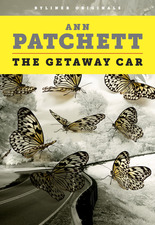
Reading Recommendation: The Getaway Car: A Practical Memoir About Writing and Life

The Getaway Car: A Practical Memoir About Writing and Life*
By Ann Patchett
Publisher: Byliner

Summary from Amazon:

“The journey from the head to the hand is perilous and lined with bodies. It is the road on which nearly everyone who wants to write—and many of the people who do write—get lost.”

So writes Ann Patchett in “The Getaway Car”, a wry, wisdom-packed memoir of her life as a writer. Here, for the first time, one of America’s most celebrated authors (“State of Wonder”, “Bel Canto”, “Truth and Beauty”), talks at length about her literary career—the highs and the lows—and shares advice on the craft and art of writing. In this fascinating look at the development of a novelist, we meet Patchett’s mentors (Allan Gurganas, Grace Paley, Russell Banks), see where she made wrong turns (poetry), and learn how she gets the pages written (an unromantic process of pure hard work). Woven through engaging anecdotes from Patchett’s life are lessons about writing that offer an inside peek into the storytelling process and provide a blueprint for anyone wanting to give writing a serious try. The bestselling author gives pointers on everything from finding ideas to constructing a plot to combating writer’s block. More than that, she conveys the joys and rewards of a life spent reading and writing.

“What I like about the job of being a novelist, and at the same time what I find so exhausting about it, is that it’s the closest thing to being God that you’re ever going to get,” she writes. “All of the decisions are yours. You decide when the sun comes up. You decide who gets to fall in love…”

This is a terrific, quick read that I recommend for anyone who wants to write or enjoys reading about writers and how they write. One thing that struck me is that Ann really emphasizes how much work writing is. I get a little tired of all the “let’s baby our muses” talk, the lighting of candles and playing of the just right music. Sit down and write already. Or as Ann puts it:

It turns out that the distance from head to hand, from wafting butterfly to entomological specimen, is achieved through regular, disciplined practice.

Yeah. She says it better than I do. Then there’s this:

Why is it that we understand that playing the cello will require work but we relegate writing to the magic of inspiration?

And the Pièce de résistance:

Art stands on the shoulders of craft, which means that to get to the art, you must master craft. If you want to write, practice writing.

Of course, it’s not all hard work for our Ann. Let’s visit the section where she acquires her agent. In summary: At twenty, Ann publishes her first short story in The Paris Review. An agent reads and calls soon after. Cue riding off into the sunset together.

Yes. I know. At this point, writers may want to do the reading equivalent of covering their ears and singing (off-key) “La, la, la, I can’t hear you.”

Because, really, all that’s missing from that scenario is Ricardo Montalban, resplendent in a white suit and pink, fruity drinks garnished with tiny, paper umbrellas. Ditto for the sale of her first book.

Even so, it’s clear the amount of work Ann put into that first book, and into her writing in general. Near the end of the piece, she writes about a period of time when she wasn’t writing and relates a bit of advice from musician friend: create a sign-in sheet and write down the time you start working (writing) and then the time you stop. Or as Ann puts it:

Time applied equaled work completed.

Sometimes this is a lesson we have to learn over and over again.

In brief, The Getaway Car is highly enjoyable and I recommend it to both writers and fans of Ann Patchett (bonus points if you happen to be both).

*Personal copy bought for my Kindle

Review: Women Heroes of World War II

Women Heroes of World War II: 26 stories of Espionage, Sabotage, Resistance, and Rescue
By Kathryn J. Atwood
Publisher: Chicago Review Press

Summary from Amazon:

Noor Inayat Khan was the first female radio operator sent into occupied France and transferred crucial messages. Johtje Vos, a Dutch housewife, hid Jews in her home and repeatedly outsmarted the Gestapo. Law student Hannie Schaft became involved in the most dangerous resistance work–sabotage, weapons transference, and assassinations.

In these pages, young readers will meet these and many other similarly courageous women and girls who risked their lives to help defeat the Nazis.

Twenty-six engaging and suspense-filled stories unfold from across Germany, Poland, the Netherlands, France, Belgium, Denmark, Great Britain, and the United States, providing an inspiring reminder of women and girls’ refusal to sit on the sidelines around the world and throughout history.

An overview of World War II and summaries of each country’s entrance and involvement in the war provide a framework for better understanding each woman’s unique circumstances, and resources for further learning follow each profile. Women Heroes of World War II is an invaluable addition to any student’s or history buff’s bookshelf.

This is a terrific volume of stories, all centering around women during World War II, in the European theater. The book is classified as juvenile or YA nonfiction, but I found it very engaging. The prose is straightforward and accessible. I really think the book would work for middle grade on up. Take note, those doing projects on WWII–your search starts here. The bibliography is extensive.

If you’re a World War II buff, the overview of the war and each country’s involvement won’t tell you anything new. However, either as a reminder or as new information, these summaries help illustrate each woman’s circumstances and challenges during the war. Plus, there’s a glossary at the back of the book as well.

If there’s a downside to this volume it’s that each woman only gets a few pages of text. Since the book is only 272 pages, that’s to be expected. At the end of each segment, the author includes a list of additional resources on each woman, including memoirs, biographies, movies, and more. Plus, as I mentioned, there’s an extensive bibliography at the end of the book.

Engaging, easy to read, informative? Yes, yes, and yes. I recommend Women Heroes of World War II for both the budding and established history buff.

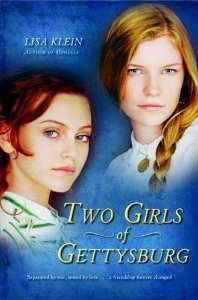
War Through the Generations: Two Girls of Gettysburg review

Okay, so I read this book back in January and it’s now … August. Yes, it’s about time I finish this review. My tardiness has nothing to do with the book. Much of what I read stayed with me: a sign of an enjoyable and meaningful book.

From the back cover:

Lizzie and Rosanna are cousins who share a friendship that should last forever. But when the Civil War breaks out, they find themselves on opposite sides. Lizzie joins the cause of the Union as her brother and father fight for freedom. Rosanna is swept up in the passions of the old South–and her love for a young Confederate officer.

Torn apart by their alliances and separated from each other, Lizzie and Rosanna are tested by love, tragedy, and the sacrifices they must make to survive. It will take one of the war’s bloodiest battles–at Gettysburg–to bring them together again, forever changed.

Two Girls of Gettysburg by Lisa Klein unfolds slowly. This isn’t necessarily a bad thing, although at nearly 400 words, it might put off some readers. My advice? Keep going. It’s worth it.

Lizzie is a prickly narrator at first, defensive and insecure at times. Her cousin Rosanna is flighty and superficial. One thing I enjoyed about the story is how the author stayed true to the girls’ core personalities, yet showed how they changed and grew during the course of the story.

The historical detail is excellent and accessible for those new to reading about the Civil War. While we do see and hear about many battles, we also get a good feel for what life was like for those not in either the Union or Confederate Army. But there’s plenty of that as well. Not just battles, but the aftermath, and conditions the soldiers (and those who cared for them) lived in.

One thing that struck me was how one became a nurse. Rosanna is literally handed a basin of water and cloth and told to get busy. For Rosanna, this is a trial by fire, most definitely. And at first, she is only there because of her young Confederate officer. As the story unfolds, it turns out that this may be her calling.

Likewise, Lizzy has to put her dreams of further schooling on hold to run the family business. At first resentful, she soon takes to business, if not necessarily the family one.

And as the title and summary imply, the do meet again in Gettysburg and maybe they get to witness President Lincoln’s famous address.

There’s a lot to like in Two Girls of Gettysburg. It’s a great place to start if you’re unsure about Civil War era fiction.

BTT: The Year in Books

From Booking Through Thursday:

What’s the best book you read this year?
Worst?
Favorite?

So many books (I’m at sixty for the year, not sure I’ll make it to sixty one). But let’s drop them into a hat and pull out some winners.

Best book goes to: War by Sebastian Junger.

Worst book goes to: one I read for the Ritas that I cannot (fortunately) disclose. Sorry, I’m not allowed to. Honest.

Favorite book goes to: The Guernsey Literary and Potato Peel Pie Society by Mary Ann Shaffer and Annie Barrows. Yes, it’s a re-read. I read it last year. In fact, I’m thinking of making it a traditional December read, I love it so much.

Other great books I read this year:

Young adult fiction:

What I Saw And How I Lied by Judy Blundell Post WWII. Deception! Lies! Best meeting the love interest scene ever!

Saving Francesca by Melina Marchetta I think I liked Jellicoe Road a little bit better but I ❤ Melina Marchetta.

Amy & Roger’s Epic Detour by Morgan Matson Road trip romance! Inner and outer journeys! Good stuff!

Young adult fantasy:

Plain Kate by Erin Bow Make this my second favorite book of the year. Loved it. Loved. The. Cat. Cried like a baby at the end. *Sigh*

Finnikin of the Rock by Melina Marchetta. Melina Marchetta does fantasy! Is there nothing she can’t write? Excellent fantasy.

Incarceron (Incarceron, Book 1) by Catherine Fisher More good YA fantasy. I’m looking forward to book 2.

Young Adult mystery:

The Agency 1: A Spy in the House and The Agency 2: The Body at the Tower by Y.S. Lee. Victorian era young adult mystery with an intriguing and smart heroine and the swoon-worthy James. And yes, I’m looking forward to book 3.

Other good books:

The Lost Summer of Louisa May Alcott by Kelly O’Connor McNees Intriguing, and now I’m on a LMA kick, so naturally I had to read:

Louisa May Alcott: The Woman Behind Little Women by Harriet Reisen

I read all three Tana French novels this year:

In the Woods
The Likeness
Faithful Place

I think Faithful Place was the best written of the three, but I enjoyed all them.

Geek Girl and the final frontier

Yes, it’s true. Geek Girl has gone where no geek girl has gone before (that we know of):

That’s right! We’re in American Cheerleader Magazine, or more precisely, there’s a review of The Geek Girl’s Guide to Cheerleading in the May/June 2010 issue (which we haven’t seen yet, but copies are on the way).

And Darcy and I chatted some more with senior editor Brittany Geragotelis for an interview on their website here: Time Out With: Authors Charity Tahmaseb & Darcy Vance.

Plus, keep an eye on their contest page. Pretty soon, five autographed copies of Geek Girl will be up for grabs as well.

May is shaping up to be a cheer-tastic kind of month.

War through the Generations WWII reading challenge: Complete!

 wwiiWar Through the Generations Reading Challenge

My goal was to read five WWII books and I read … five WWII books. I know. I’m astounded as well.

In all seriousness, I really enjoyed this challenge; it was my first reading challenge in general and I picked a great one to get started on what I suspect might become an addiction. Watching all the reviews come in on War Through The Generations added to my TBR pile. Keeping up with all that must have been a challenge on the part of the blog owner and I appreciated it.

On to the books!

Past and Present:

Two books I read fall into the “past influences the present” category.

Tamar: A Novel of Espionage, Passion, and Betrayal by Mal Peet

I have a longer review here, but I really enjoyed how Mal Peet wove this tale of past betrayals and damage from the war into a present-day coming of age story. It’s an important reminder that war doesn’t just end.


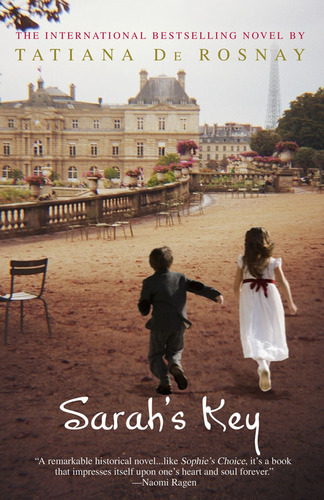
Sarah’s Key by Tatiana de Rosnay

While I enjoyed this book, of the five, it was my least favorite. There were parts I really liked. The history was riveting. I knew a bit about the 1942 Paris roundups and deportations, but not a whole lot, and not about the Vél’ d’Hiv’ in particular.

Like other reviewers, I found the modern-day portion of the story not quite as satisfying. Or rather, there were parts I thought added to the story and parts that left me less interested. When the story focused on Julia’s quest to find out how her in-laws were connected to the Sarah of the title and the repercussions of that, I felt the modern portion really hit its stride. I especially liked the growing understanding between Julia and her previously remote father-in-law despite her crumbling marriage to his son.

The ending, to me, felt removed, divorced from the story, although I don’t think the author meant it to be. I recommend this one with reservations.

Can you keep a secret:

Normally the setup where the protagonist is “living a lie” is one that is a challenge for me. It’s probably why I don’t like a lot of romantic comedies. I find the motivation for the lie silly or unnecessary. Wouldn’t it be easier to tell the truth? Yeah, I know, that would mean a fifteen minute movie, which wouldn’t exactly work.

When done well (as with the two books below), I’m So. Freaking. Tense. I can barely stand it.
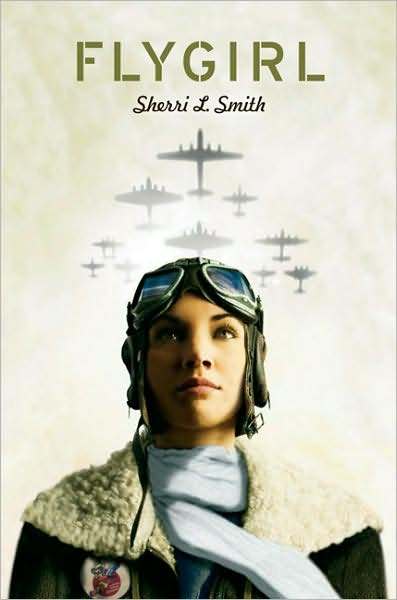
Flygirl by Sherri L. Smith

I loved this book. I loved it so much, I nominated it for this year’s Cybils Awards. Not only is it an entertaining read, it packs in an incredible amount of information, not only about the WASP program, but life in the south and the military for African Americans during the 1940s. It would make an excellent book for a middle grade/high school classroom.

I adored Ida Mae. While Sherri Smith builds an excellent case for her to pass as white and join the WASP program (the only way she can join is to pass for white), as a former Army vet, she didn’t really need to convince me. Go Ida Mae!

I found myself grinning during the training scenes, and at the reactions of the civilian women to the flygirls (all women associated with the military must be “loose,” don’t you know). Some things simply don’t change.

All in all, an excellent read. I highly recommend it.

Ten Cents a Dance by Christine Fletcher

In this novel, Ruby, both tough and naïve, faces the challenge of providing for her family when her mother can no longer work due to rheumatoid arthritis. Choices are limited for a sixteen-year-old Polish-American girl in 1941. She’s tempted away from her job in the meatpacking plant (wonderfully and nastily described–I don’t blame Ruby) by the local bad boy heart throb.

She finds herself working as a taxi dancer, keeping five cents for every ten-cent dance, although she tells her mother she has found work as a night-shift telephone operator. Ruby gradually learns to “fish,” and gets a lot more than five cents for her efforts.

This is a downward spiral story, and it’s a hard fall for Ruby. Even so, Christine Fletcher had me cheering Ruby’s small victories, even the ones I knew would come back to bite her in the rear end.

It’s also a fairly gritty look at an era we tend to romanticize: organized crime, blatant racism, limited opportunity. It’s all there.

In the end, tough little Ruby saves herself. It might not be a rose petal happily ever after, but I found the end of her story totally satisfying.

I recommend this one, especially for writers. Not only is there the overall story arc to provide tension (oh, ow, ow, yes, it killed me), but Christine Fletcher has mastered the art of what Donald Maass calls micro-tension–that tension on every page that keeps people reading.

Squee-filled fan-girly love:

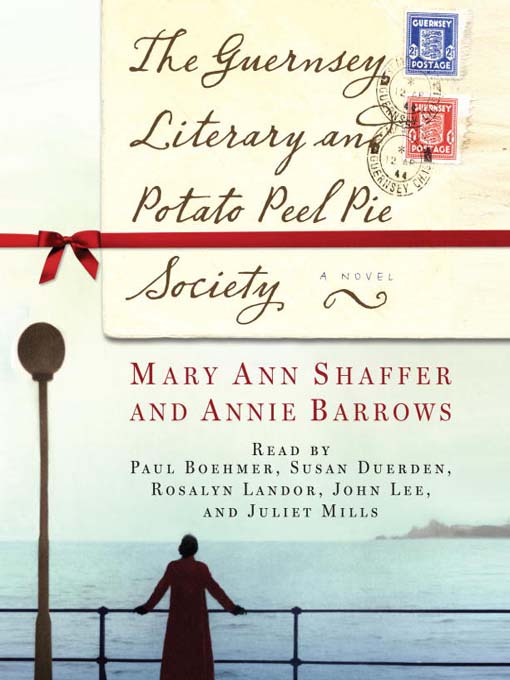
The Guernsey Literary and Potato Peel Pie Society by Mary Ann Shaffer and Annie Barrows

This is a novel told in epistolary form, a series of letters between author Juliet Ashton, her publisher, and the inhabitants the channel island of Guernsey.

I knew next to nothing about the German occupation of Guernsey, and in that respect, this novel illuminates a great deal about that. But beyond that, it’s a bibliophile’s book, it’s a charming book, and I’m not going to attempt any type of review because I have massive fan-girly love for it.

Seriously, if I had to pick a favorite book read for 2009, it’s this one. Additionally, the audio book is doubly excellent, the actors for the various characters pitch-perfect.

Highly recommended, if you haven’t already guessed.

Holiday this ’n that

Sometimes the best gifts really are free:


 Ha! Do you love it? It’s in my size, too.

 YA Book Nerd’s Best Books of 2009 (scroll down to the category Girls with Brains).

Bookworming in the 21st Century’s review of Geek Girl.

Well, I’m off to cash in some of those gift certificates. Hope everyone had a lovely holiday. Here’s to a happy 2010!