Rhythm and Flow

This week, I experimented with increasing my manuscript time blocks. I increased the number by one, so instead of three, I was doing four time blocks.

By Thursday, though? Full-on brain and body revolt. I did a single time block, and then everything in my being noped out. I was done. This wasn’t garden-variety resistance. This was me, having outrun the story in my head.

So I closed the manuscript and switched to some admin tasks that needed to be done.

On Friday, I did three time blocks and—to quote Goldilocks—it felt just right.

I know, from past experience, that I’ll write more the closer I am to the end of the book, and revision has its own sort of rhythm.

This is also why I’ve noped out of listening to writing process advice. I’m never going to write 5,000 words an hour. More to the point, I actually don’t want to. That’s not how my stories happen.

My stories are slow-and-steady tortoise things. I can embrace that and be happy. Or, I can fight that and be miserable.

I’m choosing to be happy.

In admin/business focus tasks, this was the week to examine our social media accounts. (That sound you hear is me laughing.) The principle behind this is that readers often look to social media first to find an author rather than a website.

Interestingly enough, this week, Cal Newport had a take on what might happen to these social media platforms in an age where “everything” is becoming short-form video content. It’s an interesting blog post, as was the corresponding podcast.

I do have a notion of what I might do with my social media accounts. It is not, however, going to be a huge part of my business. In seasonal news, it’s cold. Those of us with any sense are hibernating.

Seven months in: another reality check

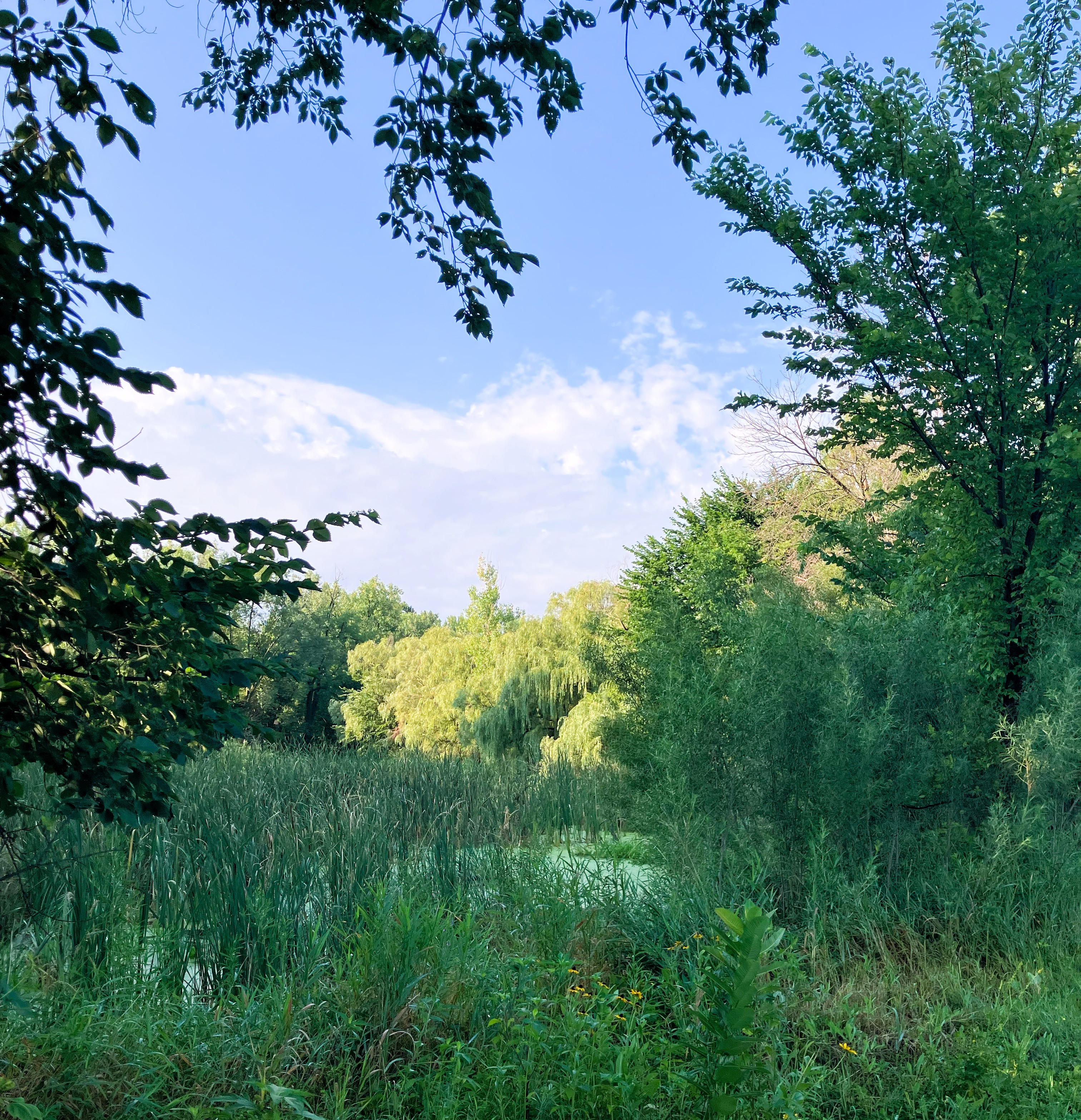
A view from my thinking-walk route

January 3rd of this year was my last day of work. After my final check-in with my manager, she told me to go ahead and log off at noon. So I did, and had my work laptop boxed and at FedEx in less than thirty minutes.

Note: It helped that the closest FedEx Office is about two miles away.

I figured that August 3rd is a good day to do another reality check. So, how’s it going?

In retrospect, pretty good.

  • I completed two paper edits of The Pansy Paradox and one of the bonus novella, The Capstone Conundrum. Yes, I love me some alliteration.
  • I’ve sent both books to my proofreader.
  • I regularly have coffee dates with a friend from my former workplace who is also a writer. This has been wonderful.
  • I attended the Author Platform Growth Summit, which focused on mindset, resiliency, sustainability, and alignment in an author career, rather than tactics, toxic productivity, and the hustle and grind.
  • I finally bought my Mac Studio and have dived headfirst into Photoshop.
  • I completed a read-through of The Marigold Miracle, and now I’m musing and bread-machining my way to a second draft.
  • I planted my cottage garden.
  • I’ve been taking lots of long (thinking) walks.

One thing that really stands out: None of the above feels like work. That doesn’t mean it’s without effort, or that I don’t get tired, or overwhelmed by information.

What doesn’t exist anymore in my day-to-day working life is this:

No context switching (h/t Cal Newport). The first thing I do with technology in the day is either write or use Photoshop. No email and no social media. I may have a browser open to a stock image site or Adobe fonts, or whatever. But that’s it.

No hyper-active hive mind and no pseudo productivity (h/t also Cal Newport). I do not miss Microsoft Teams or VPs/senior directors sliding into Teams chat on the regular. I really don’t miss unending email threads where someone copies me on a discussion because it “might” be a documentation issue. (And to be clear, everyone involved would love to make it a documentation issue—well, except documentation.)

So work? Doesn’t feel like work. I do want to stress that I still get tired, still need weekends to give my brain a break. But I don’t get the Sunday scaries. In fact, I really love Monday mornings.

And I couldn’t be more grateful.

Rainbows, sunsets, and bread machines

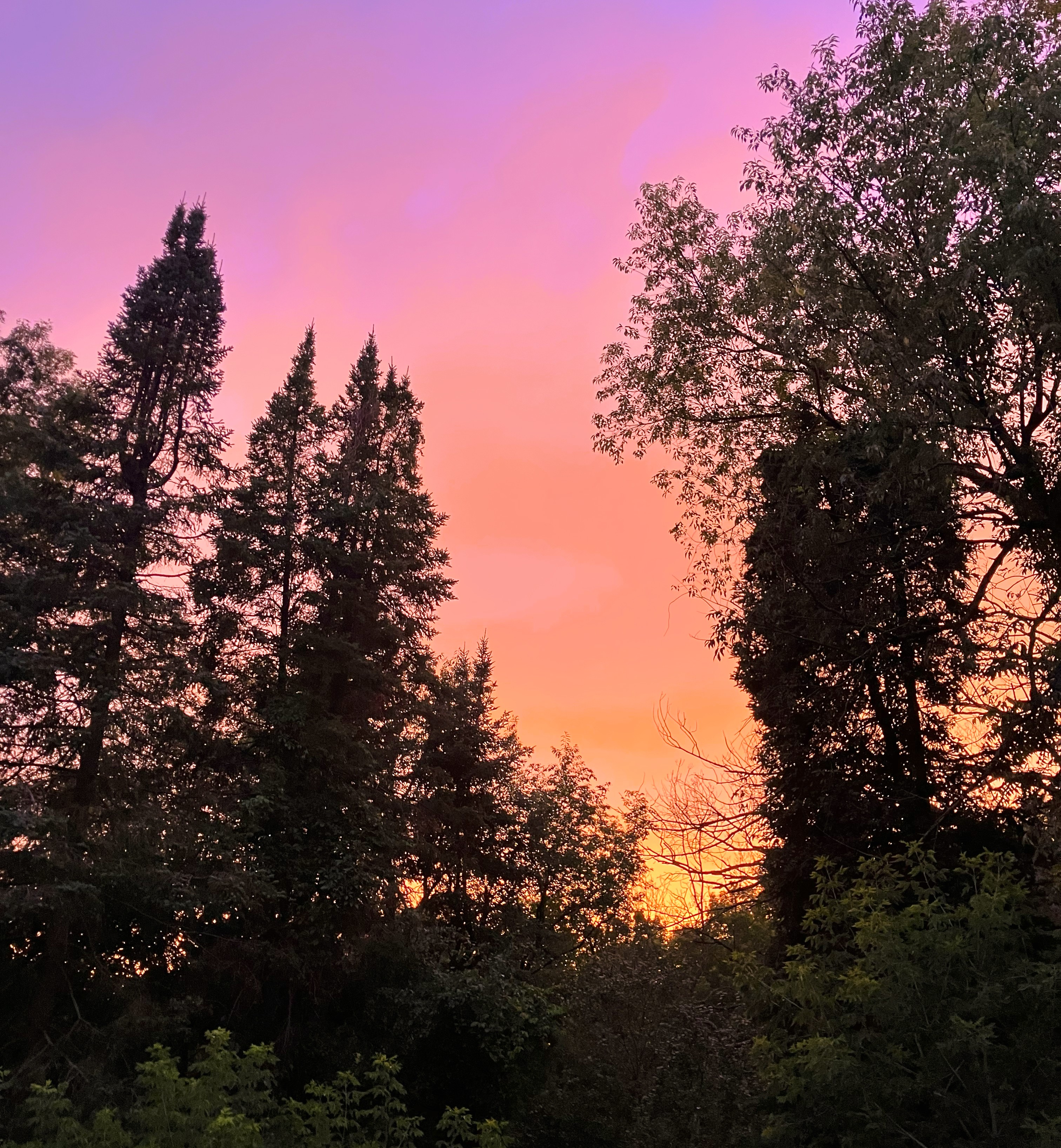
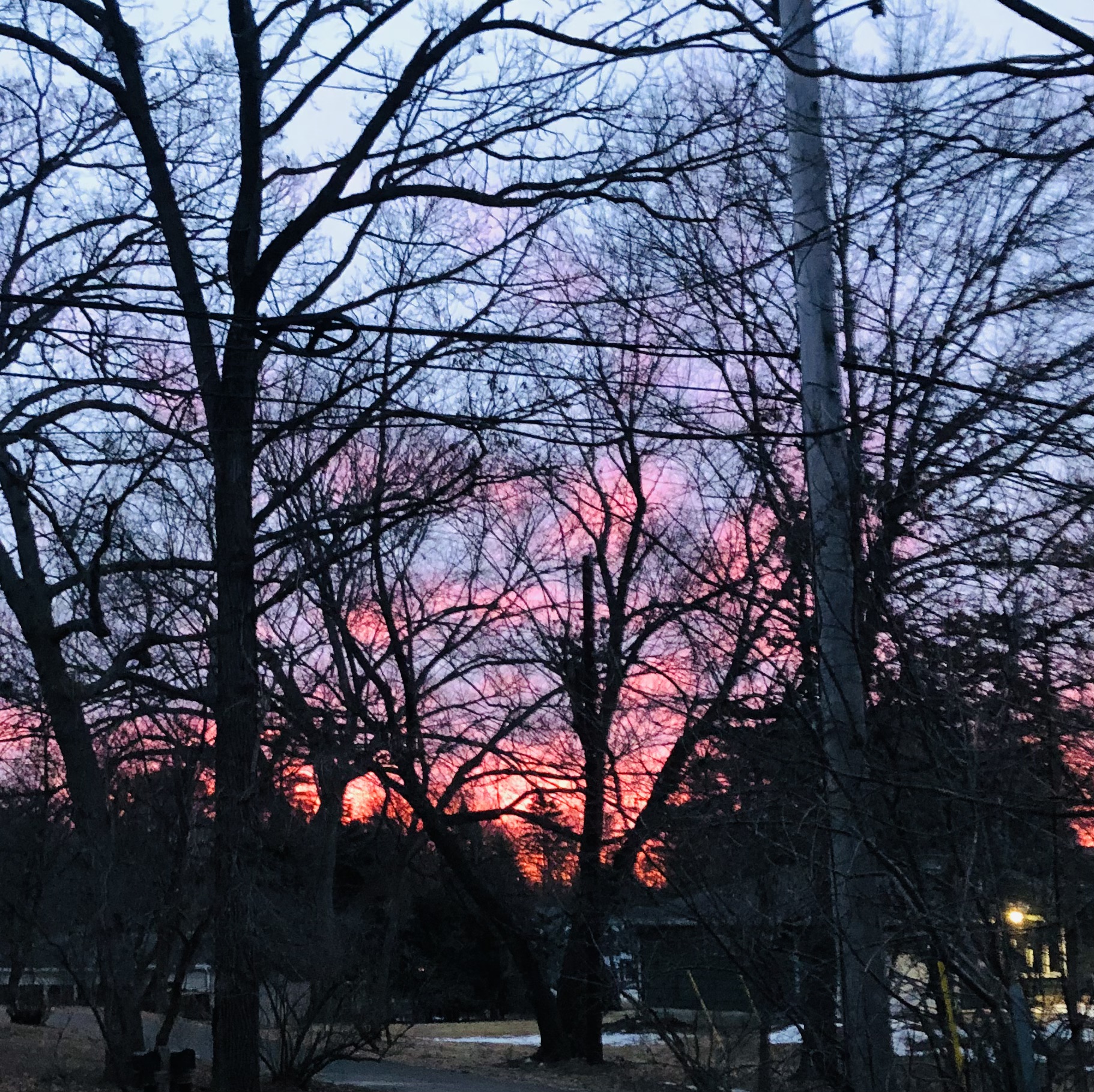
So on Monday evening, the sky decided to present us with this:

A rainbow to the east and a sunset to the west!

Rainbow over our house
Sunset from the back deck

I’ve been decidedly in bread machine mode with book two (The Marigold Miracle). I’ve been reviewing the draft—slowly—making notes, and then letting everything simmer or churn or do whatever it is my brain does when I’m not paying attention.

It’s nice to really embrace and refine my bread-machine way of writing. I already have some (what I hope are) nifty ideas for draft two. When I wrote the original draft, I knew that the initial scenes would not be the first scenes of the book. But, at the time, I simply needed a way into the story and those scenes worked for that.

It’s not flashy, but I’m pleased with this progress. I’ve also made a dent in all those Photoshop tutorials as well this week. And since the air quality here is awful and I’m stuck inside, that’s what I’m going to do next.

Make way for admin days and ducklings

This week, I tried something a little bit different. I decided to take an admin day during the week, one where I didn’t write, but used that morning focus time for writing and publishing-related tasks instead.

Usually, I’d tackle one or two of those after my writing session. But you know what? After my writing session (about 3 – 4 hours of deep work), my brain is done. I don’t want to sit at the computer and do more stuff. It’s enough to clear out my email, comment on a blog post or two, and then head outside.

So, I thought, why not try an admin day during the week, use that focus time to knock out several publishing and personal admin tasks. Not only will I get things done (that need doing), but I can bring fresh energy to the tasks.

Additionally, if I schedule the day mid-week, I can also let my subconscious do some story simmering as well.

I think this might work. At any rate, I’m going to experiment with one admin day per week this month and evaluate the results once July arrives.

In other news? Well, ducklings!

Mama duck and all her ducklings, in a pond along the park/nature trail

The wisdom of weekends

I’ve been experimenting with time management and how I want my days to look like now that I can set my own schedule.

One thing is becoming clear:

There’s wisdom in taking weekends and time off.

Back in January and February, I was writing seven days a week. I was so darn excited to have the time and head space (especially the head space) to write. Book two was simply waiting for the cognitive overload from my corporate job to clear out so I could write.

Then, I needed a break. I know this about myself. I’m what Becca Syme calls a bread machine writer. In her article Why Isn’t This Easier, she writes about bread machines (the writers, not the appliance):

Your brain is wired like a bread machine, so the easier books to work on are the ones where you’ve had more time to put all the ingredients inside the machine and let it sit for a long time. But when you become a professional writer (even if you’re not writing full-time), you don’t get to spend years thinking about a book, unless you’re GRRM. So, when you take away part of the way your brain functions creatively best, it becomes more and more difficult to complete the process.

I need time to think, both long term—hey, I’ve been musing on The Pansy Paradox and the series for a decade, y’all—and short term.

So, maybe it’s an afternoon when I head to the garden center and look at all the plants (I know, I know; I’m running out of space.) Maybe it’s a trip to Half-Price Books to restock the Little Free Library.

In any case, I’m taking a conscious look at my schedule. I’m questioning why I do things when I do them and considering whether there’s a better way for me to do what I want and need to do.

Today? The siren song of the garden center is calling my name. (Can you hear it? I can definitely hear it.) Yesterday was the Guthrie Theater and Agatha Christie’s The Mousetrap.

All in all, not a bad weekend. (And would you look at the Mississippi. We got a lot of rain last week.)

One month in and what I’m working on

Hello February sunrise

Last week, Anno asked what I was working on and whether it was the series about Pansy (she of the sentient umbrella).

And yes, yes, it is. I’m writing the entire series. Or rather, I believe it’s the entire series, three books with a companion novella. I’m writing the whole series first before publishing any of it.

I’m doing this for a couple of reasons. First, I simply want the joy of writing it without any external expectations. If I publish the first book and it’s nothing but crickets and tumbleweeds, that can make the subsequent books more difficult to write.

If the first lands and finds its readership? Well, that could make the subsequent books even harder to write.

Right now, I’m in my writing bubble and having an immense amount of fun, and I don’t want to give that up.

Second, I think the series will be better for it. I’ve already refined the world-building by writing book two. I’m keeping notes of what I want to change in book one. Small things, a sentence here or there, backstory that needs a slight rephrasing. I could probably get away with not doing this, but I really enjoy doing this sort of work. To borrow a word I used a few blog posts ago, it feels like a luxury.

Last but not least, I believe that, in the long run, it will take less time to publish the entire series. There was a three-year gap between Coffee and Ghosts books three and four. Part of that was circumstances (oh, hi, pandemic). Part of it was I had to figure out how to bring back (spoiler) the entity. The entity is Katy’s foil. The series doesn’t work without the entity sticking its nose into things—not that the entity has an actual nose.

I will start publishing once book three is drafted and I feel secure about the content. Not all at once, but readers will know the series is complete.

So, during this first month of full-time writing, I reached ~91,000 words in book two (yes, these are long fantasy books). I’ve written close to 20,000 words this month. Considering I’m still recovering from burnout, I feel that’s significant. It feels like a win.

Also, one month in?

No regrets.

Shenanigans and hibernation

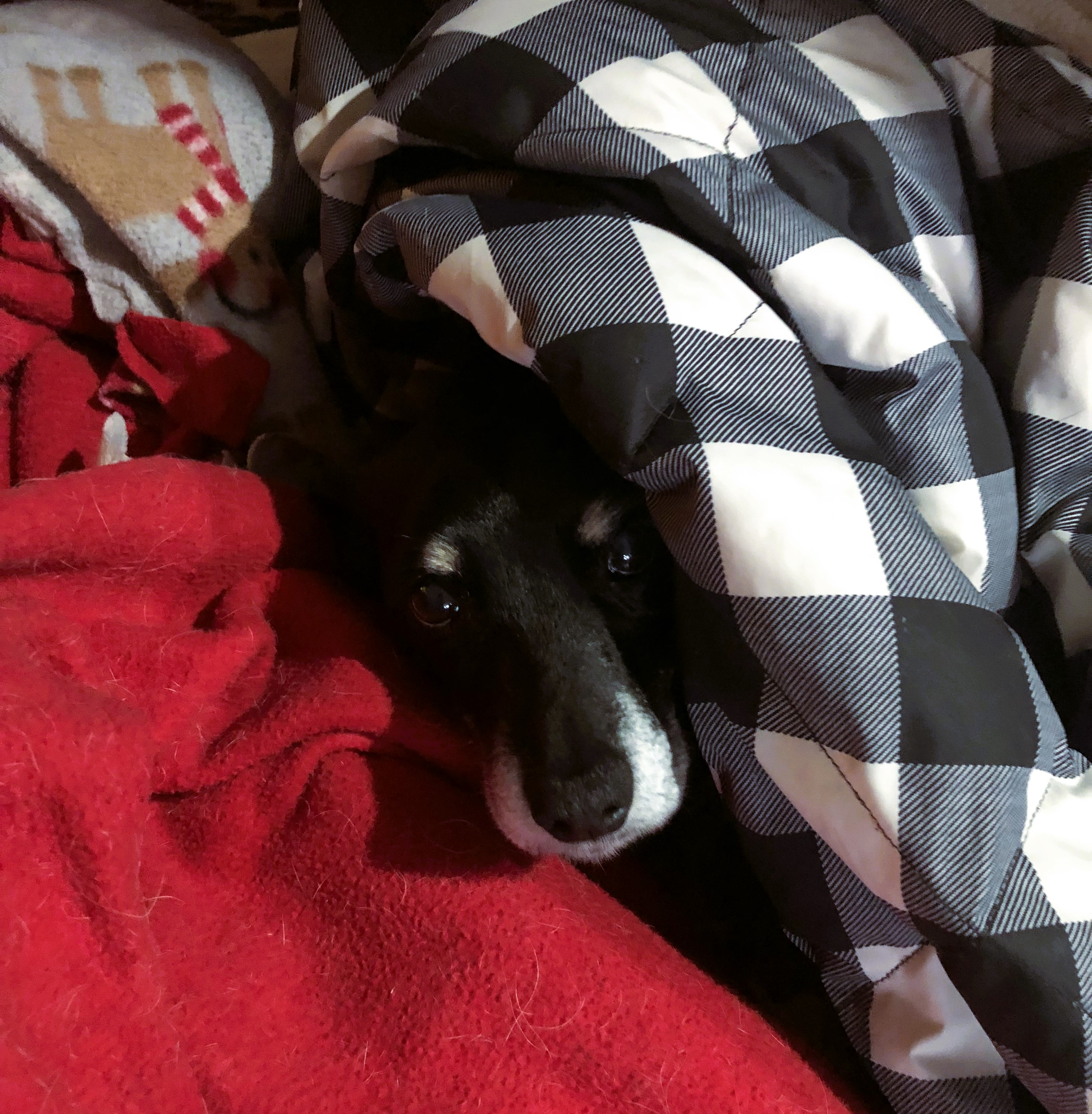
We’ve been in hibernation mode this week. Kitty, of course, secured the coziest pet bed.

But it’s not like the dogs are suffering. We have more pet beds than pets and lots and lots of fleece blankets.

See? Plenty of blankets.

But it was definitely a week for hibernation.

Maybe it’s because I’ve been consistently writing every morning, and the story is in my head a lot more these days, but I had a book three brainstorming session this week as well. The sort that really does feel like a storm, where you’re typing notes as fast as you can because the ideas just keep coming.

Up until now, book three has been essentially a blank canvas. I know the (many) story threads I need to tie together, but the what and how and when could be summed up with one word:

Shenanigans

True, book three is all about shenanigans. But now I have an idea of what those shenanigans might be. This is a good thing since I’m getting close to the end of book two. I’m not only relieved, although I am that. But I’m excited as well. I’ve been trusting my intuition and subconscious to work things out while I’m busy elsewhere, and I’m pleased that’s happening.

This coming week is bringing us some warmer weather. However, I predict Kitty will still claim the best bed in the house.

The strange indulgence of being offline

So this week, I headed downtown to meet with my accountant to do writerly business-y type things. I discovered that the office was one block away from the statue of Mary Tyler Moore.

This felt fortuitous, so I had to stop to take a picture.

You’re going to make it after all.

My morning routine hasn’t really changed since I started this full-time writing thing. I pushed my wakeup time forward by half an hour. I don’t know if this is my optimal wakeup time, but it feels close.

It’s true I no longer rush in the mornings to get an hour (or less) of writing done. The other thing that’s changed?

I don’t go online until noon. This is starting to feel like a routine now. But at first? It was like I was breaking some sort of rule. After all, being accessible was part of my previous job.

It’s not like people can’t contact me in case of an emergency. I don’t silence my phone. But I don’t get a lot of calls or text messages to begin with, so I don’t need to. I also don’t have social media on my phone (10/10 would recommend not having social media on your phone).

I obviously need to be online for this writing thing. And there’s a lot I like about being online, friends, interesting things to read, and hey, look, I’m writing this blog.

But it’s also abundantly clear that there’s a billion-dollar industry that’s intent on capturing as much (all?) of our time and attention. Not giving into that feels like an indulgence, a luxury.

And that has given me pause this week.

If you’re dealing with the polar vortex this week, stay warm!

Accountability check-in: bread machine

This week, I unearthed my old bread machine from one of the lower cupboards in my kitchen. And when I say old bread machine, I do mean old. Not only could it vote, but it’s been around long enough to graduate college, complete med school, and residency before chucking it all to become a YouTube influencer.

My bread machine. She’s been around the block a few times.

I was wondering whether it would still work. Then I reasoned, why not? It’s only been napping there on the lower shelf, and there was no reason not to try it out.

So I bought a couple of bread machine mixes. Low stakes here. I decided not to go all in until I knew for certain.

What do you know?

It still works! And there’s nothing like the smell of baking bread for instant comfort. Unless it’s slicing into a warm loaf soon after.

So, my bread machine is very similar to my writing process. I’m not a fast writer. My stories need a lot of subconscious churning before they’re ready. So, this series I’m working on?

It’s been “in the works” for ten years.

Yep, you read that correctly. Ten. Whole. Years.

Granted, I’ve been doing any number of things during that time, including writing a whole other series (Coffee and Ghosts). In fact, I think I needed to write that first before writing this one.

It can be frustrating to be in this place, to have your process be the opposite of the current hustle and grind culture. But I’ve learned (often the hard way) that it’s so much better for me and my stories to write this way. In the long run, I actually get more words and more stories, have more fun, and end up with better stories.

And this week, I’m grateful that my bread machine reminded me of that.

What I learned from posting a story a week for an entire year

So, I meant to write up and post these thoughts last year. Really. I did. I have longhand notes and everything. Then, well?

2021.

I may be a year late, but I think what I learned still stands the test of twelve months. I hope you think so too.

In November 2019, I conceived of the idea of posting a story a week for an entire year. With the upcoming presidential election in the US, I knew it would be rough going. I wanted to do something kind; I wanted a distraction; I wanted something to focus on other than the news. I even called the challenge The (Love) Stories for 2020 to remind me of my aim for love, compassion, and kindness.

Then, of course, 2020 actually happened. Oh, my sweet summer child—you had no idea, did you?

I’m not the sort of writer who could write and post a short story a week for an entire year. That’s not how I’m wired. (If you’re wired that way, more power to you; I am brimming with envy.)

That being said, I thought I’d share the things that helped me get through this challenge. I offer them up in hopes they might be useful.

Party like it’s 1999: Focus on what you love and what’s fun, what you’d do even if you never got any recognition or payment. This is essentially the dance like no one’s watching advice. It doesn’t work for everyone, but it does for me.

Plan like it’s 2020: If the last two years have taught us anything, it’s that things happen. Things will continue to happen. They may be external things well beyond our control, like elections and pandemics. They may be other things, like graduations and weddings, all the joyful things in life. Peer into your crystal ball as far as you can and plan accordingly, which brings me to…

Scheduling is your new best friend: I blog on WordPress, but I imagine most platforms have a draft and scheduling function. Scheduling posts several weeks in advance gave me breathing room. It allowed me to work on new and not-quite-there-yet stories.

Inventory on hand: Related to scheduling is having a fair amount of inventory on hand. Again, I’m not a fast writer. I might be able to write a story a week, but I’m not sure I could write a story a week that’s ready for prime time, so to speak. Also? In April 2020, I got Covid. Between inventory on hand and scheduling, I continued the challenge until my body and brain were back online.

It will take more time than you think it will: Always. Trust me on this one.

The takeaway:

A challenge like this is a way to create and/or preserve a body of work. The content is evergreen and can have more than one use. When you own the rights to your work, you can do any number of things with it.

There are those external rewards, such as blog traffic, SEO, comments, and finding new readers. But for me, the results went far beyond the external.  

I loved discovering what resonated with readers. Some of my “just for me” stories resonated so strongly with others that it helped me trust my inner voice a bit more, which spilled over into Season Four of Coffee and Ghosts. I’m not sure I would’ve written that without completing this challenge first.

I loved spending time with my own voice, rediscovering patterns and themes in my own writing.

In a world that’s always so loud, both online and off, it’s easy to miss what’s surprising and unique about your own voice. My 2020 challenge helped me reconnect with that.

So, what are you waiting for? Go forth and concoct your own challenge. But remember:

Always plan like it’s 2020 (or 2021).

But party like it’s 1999.